

Short answer: Yes. At Yoni Somatic Wellness in Hanoi, you can ask for a relaxation-focused massage and request that intimate areas be excluded. State your preference before booking, ask the team to confirm the exact service scope, and repeat your boundaries with the therapist before the session begins. A Yoni massage label does not mean you have to agree to every part of a service.
A traveler may be curious about a new wellness experience and still feel unsure about intimate touch. One guest might want a general back, shoulder and leg massage after a day of walking; another may be comfortable with a broader session but want certain areas left out. Both are valid preferences. You do not need a dramatic reason or a personal explanation to set a limit.
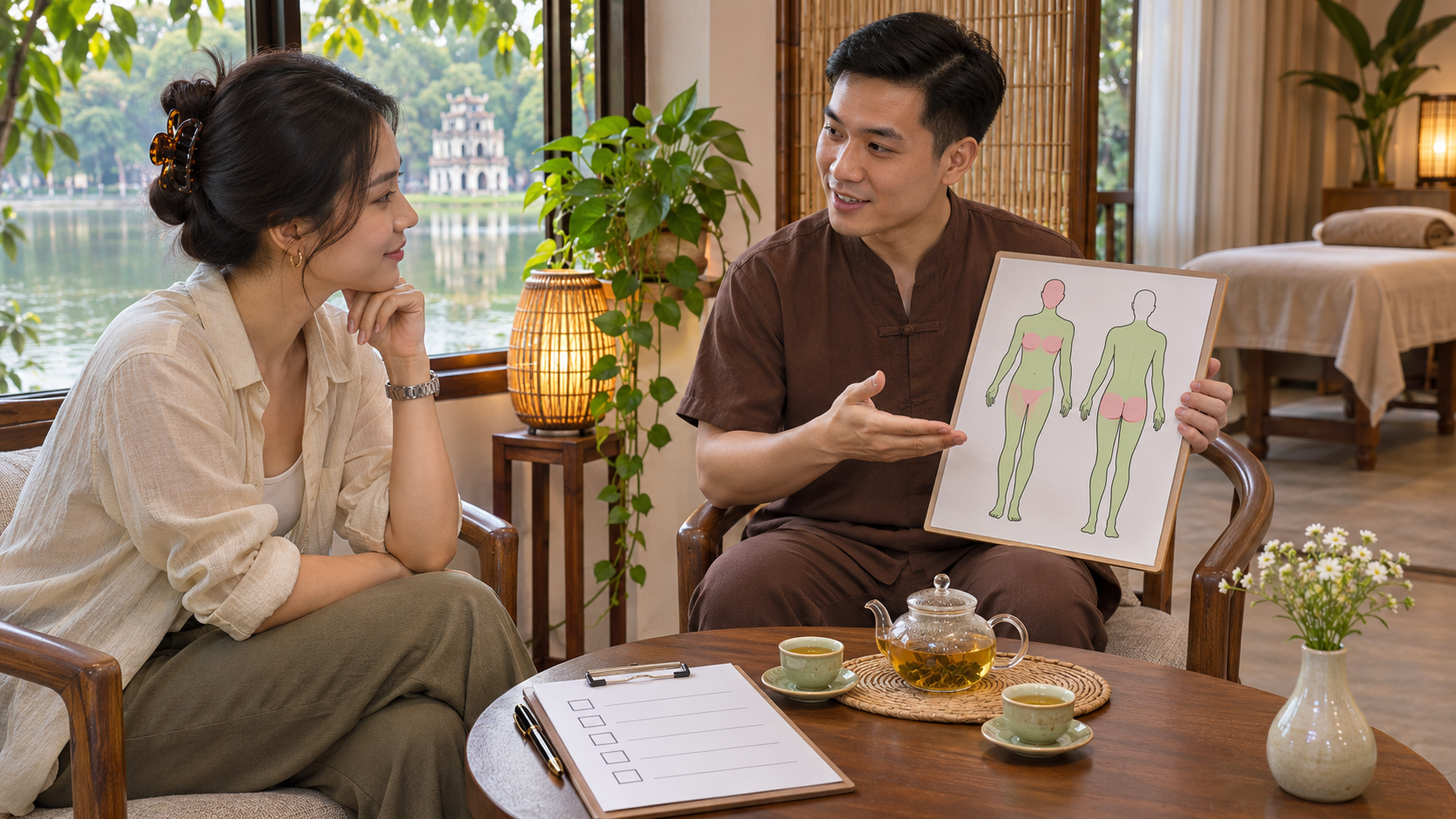
Can you choose a massage without the Yoni part?
You can ask for a session that excludes intimate touch. The business’s current service information says guests may choose a relaxation-only session and leave out the Yoni portion. Because packages and appointment details can vary, ask the booking team to confirm that this preference is recorded for your specific session before you travel or pay.
This is a choice about scope, not a special favor. You can say that you want a full-body relaxation massage only, or name specific areas you are comfortable having included. You can also ask for areas to be completely avoided. If the team cannot clearly confirm the requested scope, you can choose another option or decide not to book.
The word “Yoni” appears in the service name, but a name alone does not settle what will happen during an appointment. The practical details—what areas are included, what techniques are used, whether any intimate touch is optional, and how you can ask to stop—should be discussed in plain language first. For a broader explanation of the service, see the Hanoi Yoni massage guide.
Three ways to describe your preference
You do not have to use technical language. It helps to describe what you do and do not want in direct, ordinary words. A clear preference gives the booking team something concrete to confirm and gives the therapist a shared plan before the session starts.
- Relaxation massage only: “I’m interested in a general relaxation massage. Please exclude all intimate areas.”
- Include some areas, exclude others: “I’m comfortable with my back, shoulders and legs being included. Please avoid [area].”
- Decide after asking questions: “Before I choose, could you explain what the session includes and which parts are optional?”
If English is important, ask the concierge to confirm how the specific therapist will understand your request. The booking team may communicate in English even when a particular practitioner’s English ability differs. You can read our separate guide on requesting an English-speaking male therapist in Hanoi and confirm the communication details for your appointment.
What to confirm before you book
A clear booking conversation should cover the service, the setting and the practical arrangements. You can keep the message brief and share only what is needed to coordinate your appointment. There is no need to disclose medical history, relationship details or past experiences just to state a boundary.
- Exact scope: Which parts of the service are included, and can the requested areas be excluded?
- Therapist: Who is available for the date and time, and can you request a particular practitioner?
- Communication: Can the practitioner understand your preferences directly, or will the concierge need to help relay them?
- Privacy and draping: What clothing, covering or draping is used, and how can you ask for an adjustment?
- Duration and price: What is the booked massage time and the total price for the studio or your hotel?
- Location and arrival: Is the session at the Chua Boc studio or an outcall, and what arrival time has actually been confirmed?
- Booking status: Has the team confirmed your time, location, therapist, service scope and price? A question about availability is not yet a confirmed appointment.
If you are staying in a Hanoi hotel, ask whether your hotel permits outside service providers before confirming an outcall. If you would rather visit a studio, ask for the exact address and allow time for the trip. The booking page and duration and price guide can help you compare the practical details.
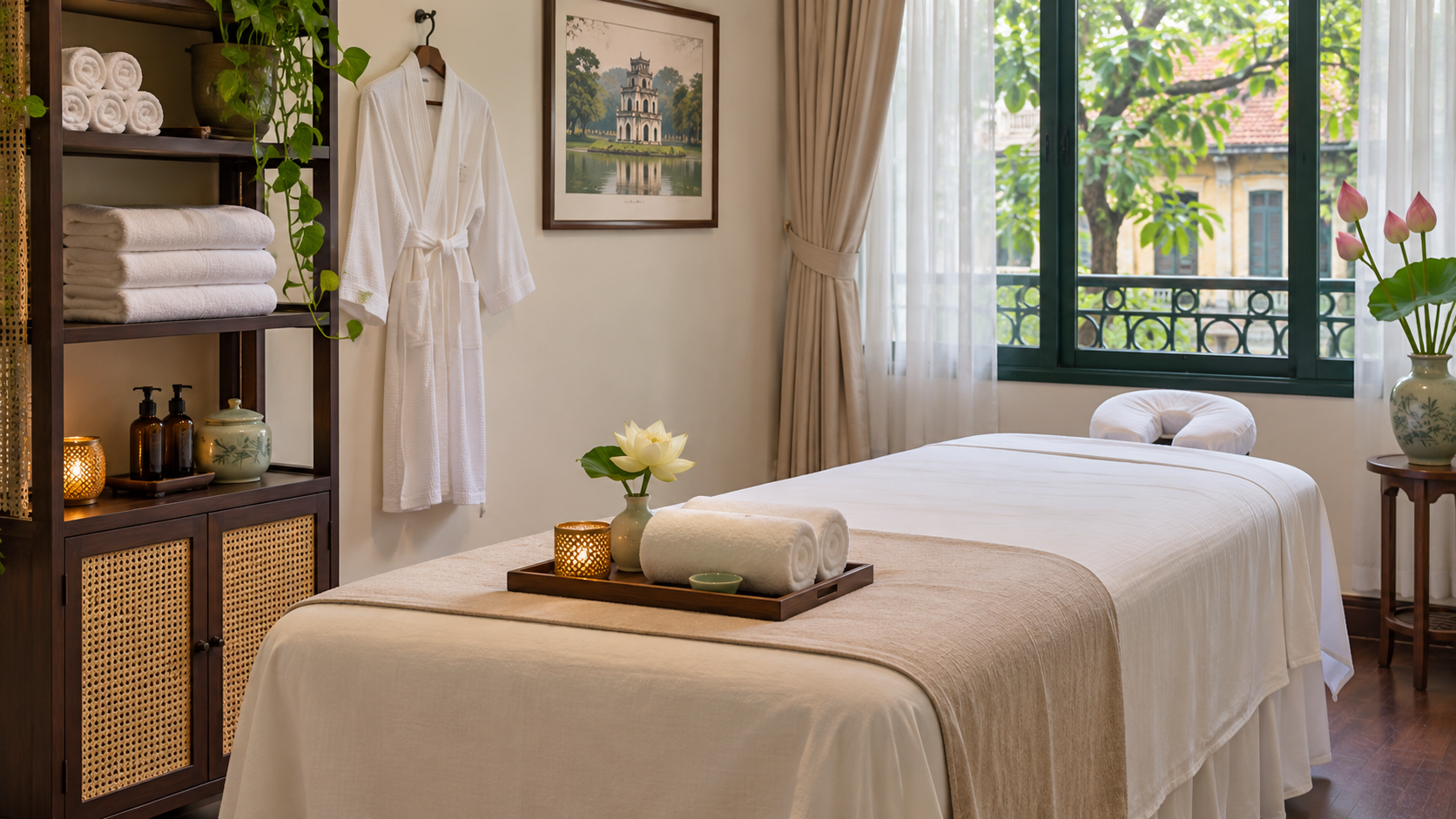
How to set boundaries before and during the session
Before the session starts, ask for a short conversation about the plan. Name the areas you want included, the areas you want excluded, and any preferences about pressure, pace or draping. You can ask the therapist to repeat the plan back to you. That simple check helps make sure you both mean the same thing before the massage begins.
Consent is ongoing. Agree on a simple way to communicate “less pressure,” “pause” and “stop.” You can change your mind at any point, even if you agreed to something earlier. If a request is not understood, pause the session and clarify it. If you feel uncomfortable or pressured, you can end the appointment.
The business’s consent and boundary guide explains its stated approach. Read it before booking if you want to understand the process in advance, then ask how it applies to your selected session. A written policy is useful context; your specific preferences still need to be confirmed directly.
A short example for a first-time guest
Imagine you have spent the day at meetings and want a quiet hour to unwind. You are interested in the studio but do not want intimate touch. You might tell the concierge: “I’d like a relaxation-focused session and want all intimate areas excluded. Please confirm that this scope is available, which therapist is working, and the total price.”
When you arrive, you can repeat the same request before changing or beginning the session. If the practitioner describes something you did not expect, ask for clarification before agreeing. You do not need to continue simply because you have arrived or because a session has started. A considerate service should allow you to make an informed choice without pressure.
A different guest may be comfortable with more of the service but want to avoid one specific area. That guest can name the area plainly and ask for it to be marked as off-limits. The principle is the same: your preferences define the agreed scope, and anything unclear should be resolved before it happens.
What this choice does—and does not—mean
Choosing to exclude intimate areas does not make your appointment less legitimate. It simply makes the session better aligned with your comfort. A wellness service should not require you to prove that a boundary is justified, and the provider should not treat a request for clarification as an invitation to persuade you.
A massage is not a substitute for medical care or psychological treatment. If you are looking for help with pain, a health concern or emotional distress, speak with a qualified health professional. For a spa appointment, focus on the service’s stated scope, your own comfort and the practical details you can verify before booking.
Frequently asked questions
Is intimate touch required in a Yoni massage?
Not automatically. At this Hanoi business, you can ask for a relaxation-only session and request that intimate areas be excluded. Confirm that exact scope with the team before your appointment.
Can I decide after the massage starts?
You can change your mind, but it is best to agree on the scope before the session begins. If you want to stop or change something during the massage, communicate it clearly and expect the session to pause.
Do I need to explain why I want an area excluded?
No. You can state your preference without giving a reason. The team needs to understand what you want included or avoided, not your personal history.
Can I ask for only a back, shoulder and leg massage?
You can ask whether that specific relaxation-focused scope is available. Describe the areas you want included and excluded, then wait for the team to confirm before booking.
What if I am not sure what a package includes?
Ask for a plain-language explanation before you choose. Confirm the techniques, areas, draping, session length and total price. If the answer is unclear, take time to decide or choose another service.
Make the appointment fit your comfort
A good first step is to decide what you would feel comfortable with today—not what you think you are expected to choose. Ask the concierge to confirm the scope in simple terms, discuss communication with the specific therapist and agree on how you can pause or stop. If the service can be arranged on those terms, you can decide whether it feels right for you.
To review the process, visit the first-session preparation guide or send a booking request. A request is confirmed only after the team replies with the agreed details.

Over 6 years researching somatic psychology, pelvic wellness, and consent-driven protocols for women in Hanoi.