Learn how to choose a reputable in-home yoni massage service, with clear pricing, careful hygiene, client privacy, ongoing consent and professional boundaries
What Makes an In-Home Yoni Massage Service Trustworthy?
An in-home massage offers convenience, but the client’s health, privacy and personal space must remain central to the experience. Since the session takes place in the client’s home, the provider should explain the arrangements clearly, bring appropriate clean supplies and respect the client’s instructions throughout the visit.
From the perspective of Massage Yoni Hanoi, a reputable service should be transparent, hygienic and considerate. Clients should be able to ask about these standards before booking and receive clear answers.
Yoni massage should be presented as a relaxation service, not as a way to diagnose or treat gynecological conditions. If a client reports pain, itching, burning, sores or other unusual symptoms, the session should be postponed and the client encouraged to seek medical advice.
1. Look for Clear Service Information and Accountable Staff
Before booking, clients should know the full price, session length, service scope, and cancellation or rescheduling terms. These details should be explained before the appointment is confirmed.
A reputable provider should also explain how therapists are selected and trained, how clients can share feedback, and how complaints are handled. Therapists should follow the business’s service standards. They should not pressure clients to purchase upgrades or negotiate unplanned services during the visit.
Personal information deserves careful handling, too. A client’s address, phone number, booking details and preferences should be used only as needed to arrange and provide the appointment. Follow-up messages should be relevant and respectful, without repeated or unsolicited contact.
2. Ask How Hygiene Is Managed During an Outcall
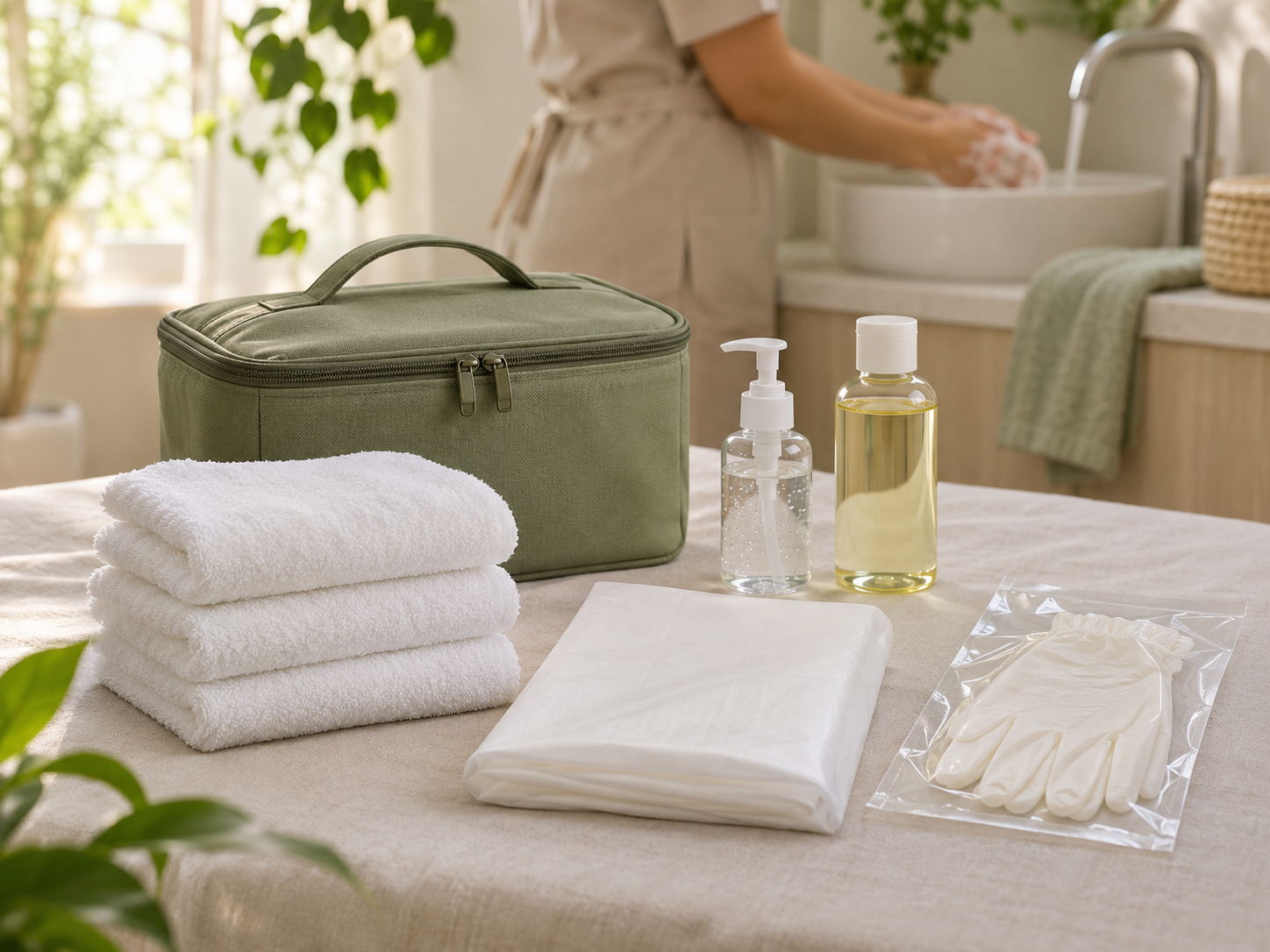
For an in-home appointment, clients may have less visibility into the provider’s usual setup. The therapist should be able to explain what supplies they bring, which items are single-use, how reusable items are cleaned between clients, and how clean linens are kept separate from used ones.
A professional kit may include fresh towels or sheets, clean containers for products and hand-hygiene supplies. Reusable equipment should be cleaned and disinfected appropriately between clients and according to the manufacturer’s instructions. The CDC identifies hand hygiene, environmental cleaning and proper reprocessing of reusable equipment as core infection-prevention practices in healthcare settings.CDC: Core Infection Prevention and Control Practices
These practices offer a useful hygiene benchmark; they do not mean that a massage service is a healthcare facility. The terms clean, disinfected, sterilized and single-use also have different meanings. A provider should describe their process accurately and avoid claiming that items are “sterilized” without a suitable process.
The therapist should clean their hands at appropriate times, including before client contact and after removing gloves. Gloves are not a substitute for hand hygiene. The CDC includes hand hygiene before contact and after glove removal in its standard precautions.CDC: Standard Precautions
Products used on sensitive skin should be clearly identified and properly stored. The therapist should ask about allergies or sensitivities, and the client should be free to decline any product. No oil or scented product should be described as guaranteed not to cause irritation.
3. Expect Respectful Conduct in Your Home
A considerate therapist treats the client’s home as private space. They should arrive at the agreed time, ask permission before entering, follow the client’s instructions about shoes and where to set up, and avoid walking around the home or commenting on personal belongings.
The therapist should be neatly and appropriately dressed for a professional service. Their manner should be calm and courteous, and conversation should stay relevant to the client’s comfort and the session. Personal questions unrelated to the service are inappropriate.
At the end of the appointment, the therapist should finish within the agreed time, pack their supplies and leave the area tidy.
4. Make Consent and Professional Boundaries Clear
Before any touch, the therapist should explain the agreed scope of the service and ask what the client is comfortable with. Consent should be specific and ongoing. A client may change their mind, decline a step or ask the therapist to stop at any time.
ACOG’s guidance for pelvic examinations recommends explaining what will happen, asking permission before touching and allowing a patient to stop. These are useful principles for respectful communication around sensitive care, even though a massage appointment is not a medical examination.ACOG: Pelvic Exams
A professional therapist should not use sexualized language, make advances or pressure a client to accept additional touch or services. If a client feels uncomfortable, they should be able to end the session without being challenged or persuaded to continue.
5. Know When to Postpone a Session
A trustworthy service does not present massage as a substitute for medical care. The therapist should ask whether the client has current discomfort or other concerns that could affect the session, without trying to diagnose the cause.
If a client reports pain, irritation, sores or unusual symptoms, the safer response is to avoid the affected area, postpone the service when appropriate and recommend medical advice. The NHS advises seeking help for symptoms such as changes in vaginal discharge, itching or soreness, pain when urinating, bleeding between periods or pelvic pain.NHS: Vaginal Discharge
Questions to Ask Before Booking an In-Home Yoni Massage
- What does the service include, and what is the full price?
- What is the cancellation or rescheduling policy?
- What clean supplies will the therapist bring?
- Which items are single-use, and how are reusable items cleaned between clients?
- How will the therapist explain the service and ask for consent?
- How can I contact the business if I have feedback or a concern?
- How will my address and phone number be used?
Clear answers help clients make an informed choice before sharing their address or confirming an appointment.
Trust, Hygiene and Consideration: A Quick Summary
| Standard | What the client should expect |
|---|---|
| Trustworthy | Clear pricing and service details, accountable therapists, a feedback channel and careful handling of client information |
| Clean | Hand hygiene, fresh linens, appropriate handling of reusable supplies and clear product information |
| Considerate | Permission before entering or touching, respect for the home, ongoing consent and a tidy departure |
A professional in-home yoni massage service should help clients feel informed, respected and in control. Clear expectations, visible hygiene practices and strong professional boundaries matter throughout the appointment—from the first booking message until the therapist leaves.

Over 6 years researching somatic psychology, pelvic wellness, and consent-driven protocols for women in Hanoi.