Learn how to massage your Yoni at home with simple steps. Find out how to prepare, massage the external area, and know when to stop for a more comfortable experience.
Sometimes, you may want to slow down and give your body a little more attention. A Yoni massage at home can be one way to do that in a private space, at a pace that feels right for you.
You don’t need to follow a long routine. You don’t have to reach orgasm or insert a finger into your vagina. A few minutes of breathing, or gently massaging your lower abdomen, hips, or inner thighs, can be a way to care for yourself.
In our article What Is Yoni?, we describe Yoni as a symbol associated with life, femininity, and connection with the body. You can bring that spirit into your practice at home: move gently, respect your own sensations, and don’t pressure your body to respond in a particular way.
What Is Yoni?
“Yoni” is a Sanskrit word used in some Indian traditions and in Tantra as a symbol. Today, many people use the word when talking about caring for their intimate area and listening to their body.
Two anatomical terms can help make the instructions clearer:
- The vulva is the external part of the genitals.
- The vagina is the muscular canal inside the body.
A Yoni massage can focus entirely on gentle external touch. You don’t have to touch every area or insert a finger.
What Can a Yoni Massage Do?
For some people, private time and slow, gentle touch can feel relaxing. It may also help you notice how your body feels and which kinds of touch you enjoy.
These are personal experiences. Everyone is different, and there is no particular result you need to achieve.
A Yoni massage is not a medical treatment for infections, pelvic pain, vaginal dryness, or pain during sex. It also cannot replace mental health care or medical advice. If you’re experiencing any of these concerns, speak with a healthcare professional to understand the cause and discuss appropriate care.
Before You Begin
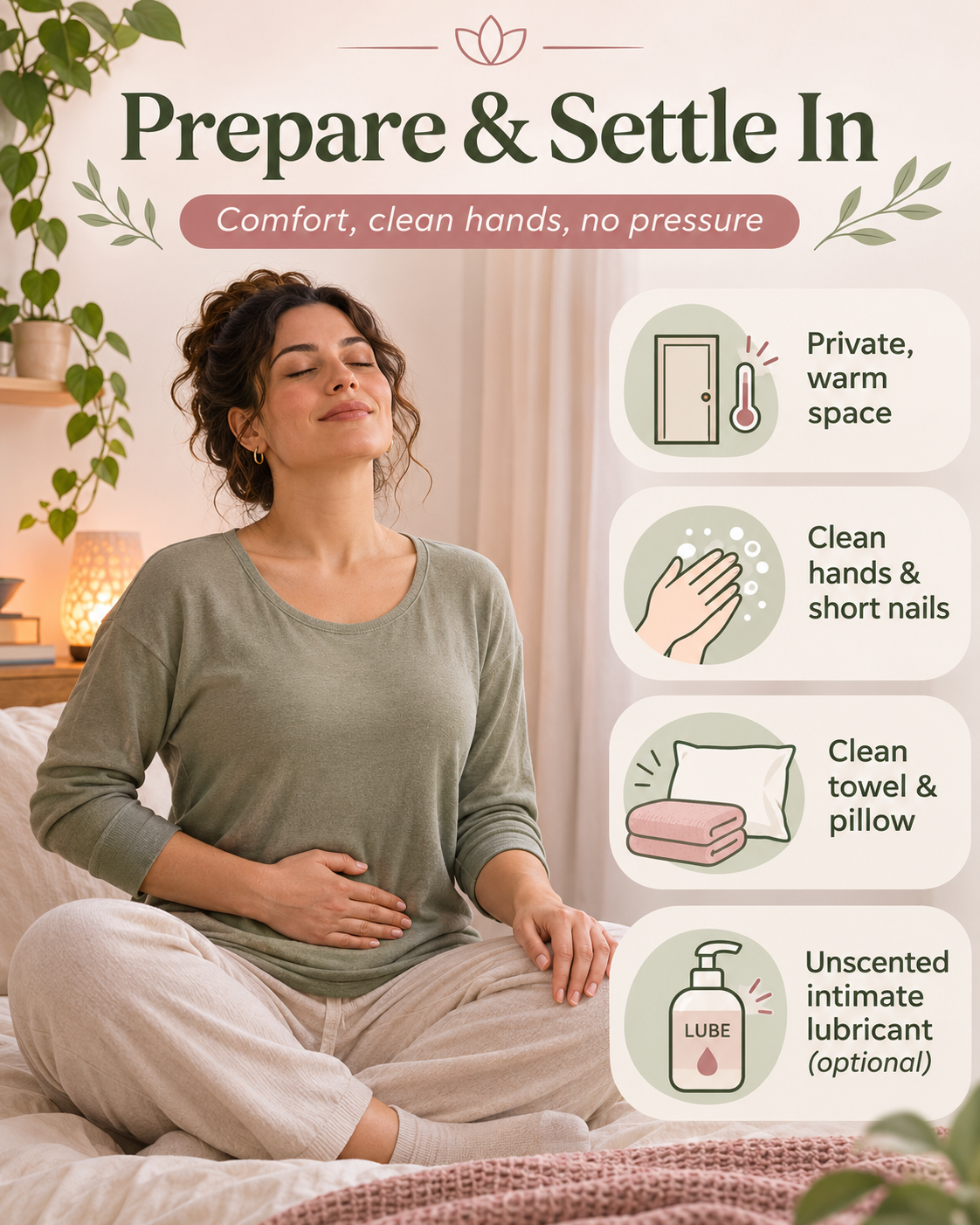
You only need a few simple things:
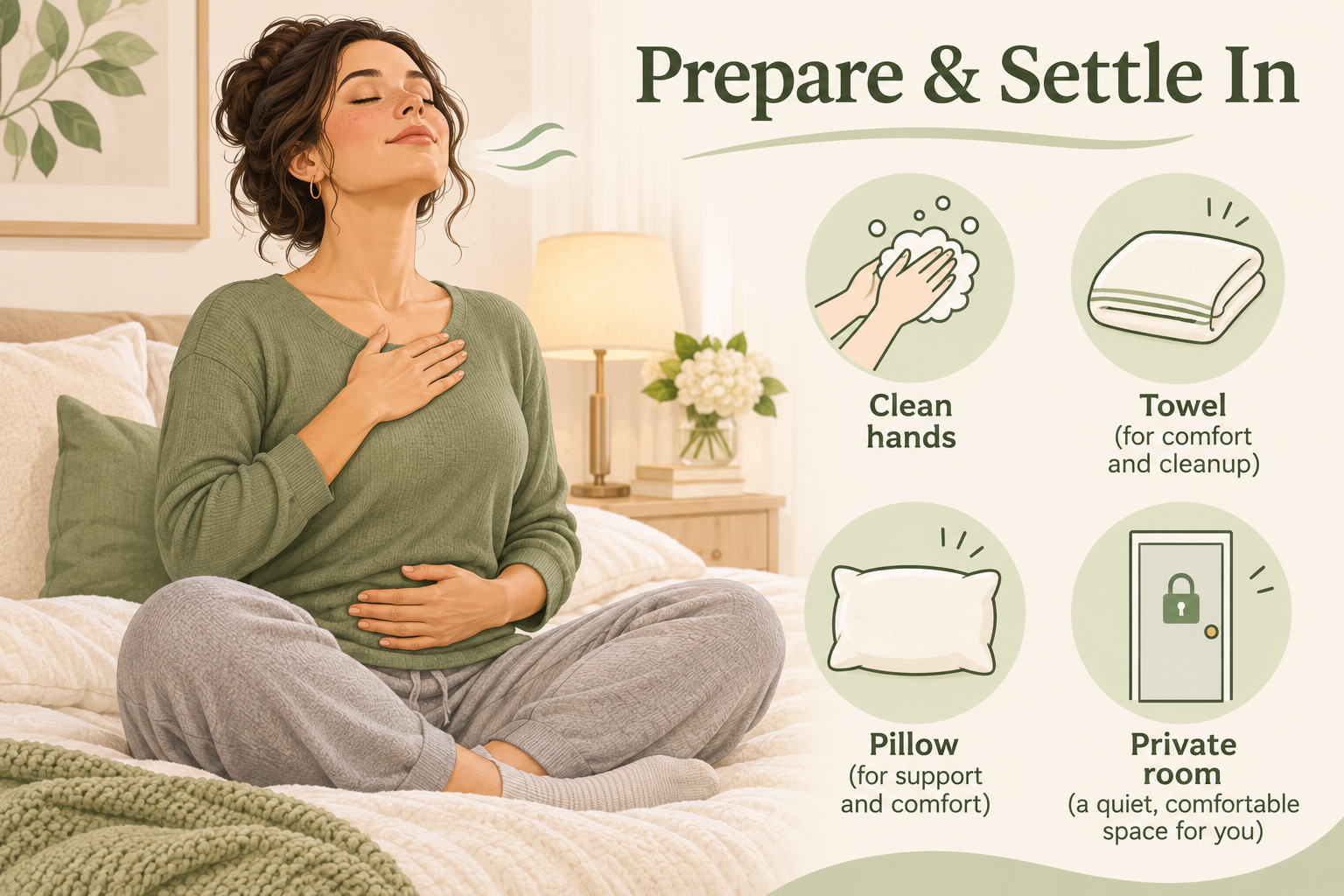
- A private, comfortably warm space where you won’t be interrupted.
- A clean towel and a pillow for support, if you’d like.
- Clean hands with short, smooth nails.
- A lubricant made for intimate use, if you need one.
Candles, essential oils, and scented products aren’t necessary. Some products can irritate sensitive skin. If you use lubricant, choose one that suits your body and stop using it if you notice itching, burning, or discomfort. If you use latex condoms, avoid oil-based lubricants because oil can reduce their effectiveness. ACOG: Experiencing Vaginal Dryness
You don’t need to douche before or after a massage. ACOG advises against douching and scented intimate hygiene products. For many people, gently washing the external vulva with water is enough. ACOG: Vulvovaginal Health
Step-by-Step: How to Massage Your Yoni at Home
Set aside 45–60 minutes if you want time to prepare, explore, and rest afterward. This is only a suggestion. You can make the session shorter, skip any step, or stop whenever you choose.
The aim is to notice what feels comfortable. You don’t need to reach orgasm, insert a finger, or have a particular emotional response.
Step 1: Decide on your boundaries
Before you begin, take a moment to check in with yourself:
- What would feel good today: relaxing, exploring touch, or simply resting?
- Which areas do you want to touch?
- Which areas would you prefer to leave alone?
- What would tell you that you want to stop?
Your boundaries can change during the massage. You can pause or stop at any time, even if you were enjoying it a moment ago.
Step 2: Make the space comfortable
Choose a private, comfortably warm place where you’re unlikely to be interrupted. Put a clean towel on the bed or mat, and keep a pillow nearby to support your knees or back. You may also want water and comfortable clothes for afterward.
Soft music or gentle lighting can help you settle in, but they’re optional. Avoid putting scented products or essential oils on your intimate area, since they may irritate sensitive skin.
Step 3: Wash your hands and prepare lubricant
Wash your hands with soap and water, then dry them. Keep your nails short and smooth. If you have a cut or sore on your hand, wait until it has healed before touching your intimate area.
If you plan to touch the vulva or insert a finger, keep a lubricant made for intimate use nearby. Choose an unscented product without warming or cooling ingredients. Stop using it if you notice itching, burning, or irritation. Oil-based lubricants can reduce the effectiveness of latex condoms. ACOG: Experiencing Vaginal Dryness
Step 4: Get into a relaxed position
Try lying on your back with your knees bent and feet resting on the bed. A pillow under your knees may help your legs relax. You can also lie on your side with a pillow between your knees, or sit propped up against cushions.
There’s no need to hold your legs in a wide or uncomfortable position. Choose a position that lets your belly, hips, and thighs soften. You can change positions whenever you like.
Step 5: Take a few minutes to settle
Place one hand on your lower abdomen and the other wherever it feels comfortable. Breathe in gently, then let your breath out slowly. Repeat for a few minutes.
Notice whether your jaw, shoulders, belly, or legs feel tense. Let them soften as much as they naturally can. Don’t force your breathing or try to push your pelvic muscles down. If you feel light-headed, return to your normal breathing and take a break.
Step 6: Begin with non-intimate touch
Rub your palms together to warm them. Start by gently stroking your arms, shoulders, or abdomen. Use a light, steady touch and take your time moving from one area to another.
You might try long strokes over your belly, small circles around your hips, or gentle strokes along your outer thighs. Notice which movements feel pleasant, neutral, or uncomfortable. Move away from any area that doesn’t feel right.
Step 7: Massage your lower abdomen and hips
Rest your palm on your lower abdomen and make small circles. Keep the pressure light—enough to feel your hand move over the skin, without pressing deeply into your belly.
Next, move to your hips and the area just above your pubic bone. Try slow circles or gentle side-to-side strokes. You can pause with your hand resting still and notice the warmth and pressure.
Avoid pressing firmly into your abdomen or groin. The touch should feel comfortable, not sharp or painful.
Step 8: Massage your inner thighs
Place your hands on your inner thighs and make slow strokes toward your hips. You can use the flat of your hand or your fingertips. Start farther from your vulva and move closer only if you want to.
Try a few strokes, then pause. You don’t need to touch the vulva next. You might prefer to stay with the thighs, return to your abdomen, or finish the massage here.
Step 9: Make first contact with the vulva
If you feel ready, rest your hand over your vulva through your underwear. Stay still for a few breaths and notice how that feels. You can keep your hand there, move it away, or continue.
If you’re comfortable removing your underwear, use clean fingertips to touch the external skin lightly. Start with the outer labia or the area around the pubic mound. Try a slow stroke or a small circle, then pause to check how your body responds.
Keep the touch gentle. You don’t need to pull, squeeze, or separate the labia. If the sensation feels too intense, place your hand over your underwear again or return to a less sensitive area.
Step 10: Explore different external touches
If the first touch feels comfortable, try one movement at a time:
- Rest your fingertips lightly on the outer labia.
- Make a slow, small circle over the external skin.
- Trace a gentle line along one side, then pause.
- Use the flat of your fingers for a broader, softer touch.
- Return to a still hand if movement feels too stimulating.
Use just enough pressure to feel the skin move beneath your fingers. There’s no need to rub quickly or repeatedly. If you notice dryness or friction, add a small amount of suitable lubricant or stop.
Step 11: Touch around the clitoris, if you want
The clitoris can be highly sensitive, so begin around it rather than directly on it. You might gently touch the skin above or to the sides of the clitoral hood. Pause and notice whether that feels comfortable.
If you want to try more direct touch, use one fingertip and very light pressure. Try a brief touch, then lift your finger and wait. You can repeat, move to a nearby area, or stop. If the sensation feels too strong, return to the surrounding skin or take a break.
There isn’t one “right” way to touch this area. You don’t need to keep going if the sensation is unpleasant, numb, or overwhelming.
Step 12: Inserting a finger is optional
External massage is complete on its own. You do not need to insert a finger into your vagina.
If you choose to try, make sure your hands are clean, your nail is short and smooth, and you have enough suitable lubricant. Rest one fingertip at the vaginal opening and pause. Only continue if you feel comfortable and there is no pain. Move slowly and insert only as far as feels easy.
You can leave the finger still for a moment, then gently move it a little or remove it. There’s no need to press against the vaginal walls, search for a specific spot, or insert deeply. Stop if you feel pain, burning, or your body tenses up. Don’t try to push through pain.
If touch inside the vagina often hurts, or if you’re hoping to address pelvic pain, speak with a healthcare professional. Internal techniques used in pelvic floor physical therapy are tailored to each person’s needs. ACOG: Persistent Vulvar Pain · Johns Hopkins Medicine: Pelvic Floor Therapy
Step 13: Pause and check in
At any point, take your hand away and pause. Ask yourself:
- Does this still feel comfortable?
- Would I like lighter touch, a different area, or a break?
- Do I want to continue, or am I ready to stop?
You can return to your abdomen, hips, or thighs. You can also end the massage without completing every step.
Step 14: Finish gently
When you’re ready to finish, rest your hands on your abdomen or thighs. Take a few comfortable breaths and give yourself a moment before getting up.
Wash your hands. If you want to clean your intimate area, gently rinse the outside with water and pat it dry. You don’t need to douche or use scented products; ACOG advises against douching and fragranced products around the vulva. ACOG: Vulvovaginal Health
You might feel relaxed, feel no particular change, or decide that you didn’t enjoy part of the experience. All of those responses are okay. Orgasm or a strong emotional reaction is not required.
When to stop or postpone the massage
Don’t massage the intimate area if you have pain, itching, burning, swelling, blisters, or sores. If you notice an unusual change in vaginal discharge, have a fever or pelvic pain, or your symptoms persist, contact a healthcare professional rather than trying to manage them with massage. MedlinePlus: Vaginal Itching and Discharge
If you’re pregnant, have recently given birth, have had pelvic surgery, or are healing from stitches, ask your doctor or midwife before doing internal massage. Perineal massage during pregnancy is a separate practice with its own timing and precautions. Cambridge University Hospitals NHS: Antenatal Perineal Massage
Keep in mind: A massage should not hurt. You can skip any step or stop at any time. This is a self-care practice, not a treatment for infection, pelvic pain, or psychological trauma.

Over 6 years researching somatic psychology, pelvic wellness, and consent-driven protocols for women in Hanoi.