Quick answer: You do not need to book a treatment to make an evening feel easier. First reduce decisions: close or park work, drink water, eat if you are hungry, make the room comfortable and choose one low-effort activity. A massage appointment can be an optional way to take time away from work if you want touch, the hotel allows a visitor and the schedule is realistic. It is not therapy and cannot guarantee stress relief or sleep.
Some evenings on a business trip feel as if the workday followed you back to the room. Your laptop is open, messages keep arriving, tomorrow’s agenda is already on your mind, and even choosing dinner can feel like another task. “I need to unwind” sounds simple until you have to decide how. This guide turns that vague wish into small choices that work even when your energy is low.
The aim is not to force calm or to make you perform a perfect self-care routine. It is to give you a few ways to create a little space between work and the rest of your night. You can use one step, skip all of them or ask for professional mental-health support if what you are carrying is bigger than an ordinary stressful day.
Start by naming what is making the evening hard
Before you decide what to do, identify the main source of pressure. Is it unfinished work, a meeting that went badly, a full calendar tomorrow, loneliness in an unfamiliar city, travel fatigue or the feeling that you have not had a moment to yourself? You do not need to solve everything in the room. Naming the problem can show whether you need a practical fix, connection, food, rest or simply a break from input.
Try writing one sentence: “The part I can handle tonight is ___; the part that can wait is ___.” If a client email needs a reply, give it a defined 10-minute window. If nothing is truly urgent, write the next step on tomorrow’s list and close the laptop. The NHS stress guidance recommends manageable actions and seeking support from someone you trust when needed; it does not suggest that every source of stress can be fixed by a relaxation activity.
A ten-minute transition out of work mode
Minute 1–2: capture open loops. Write down the unfinished task, who owns it and what the next action is. “Prepare slides” is vague; “send finance chart request to Mei at 09:00” is actionable. This is not a promise that you will stop thinking about work, but it gives your mind a place to return to the issue without keeping every detail active.
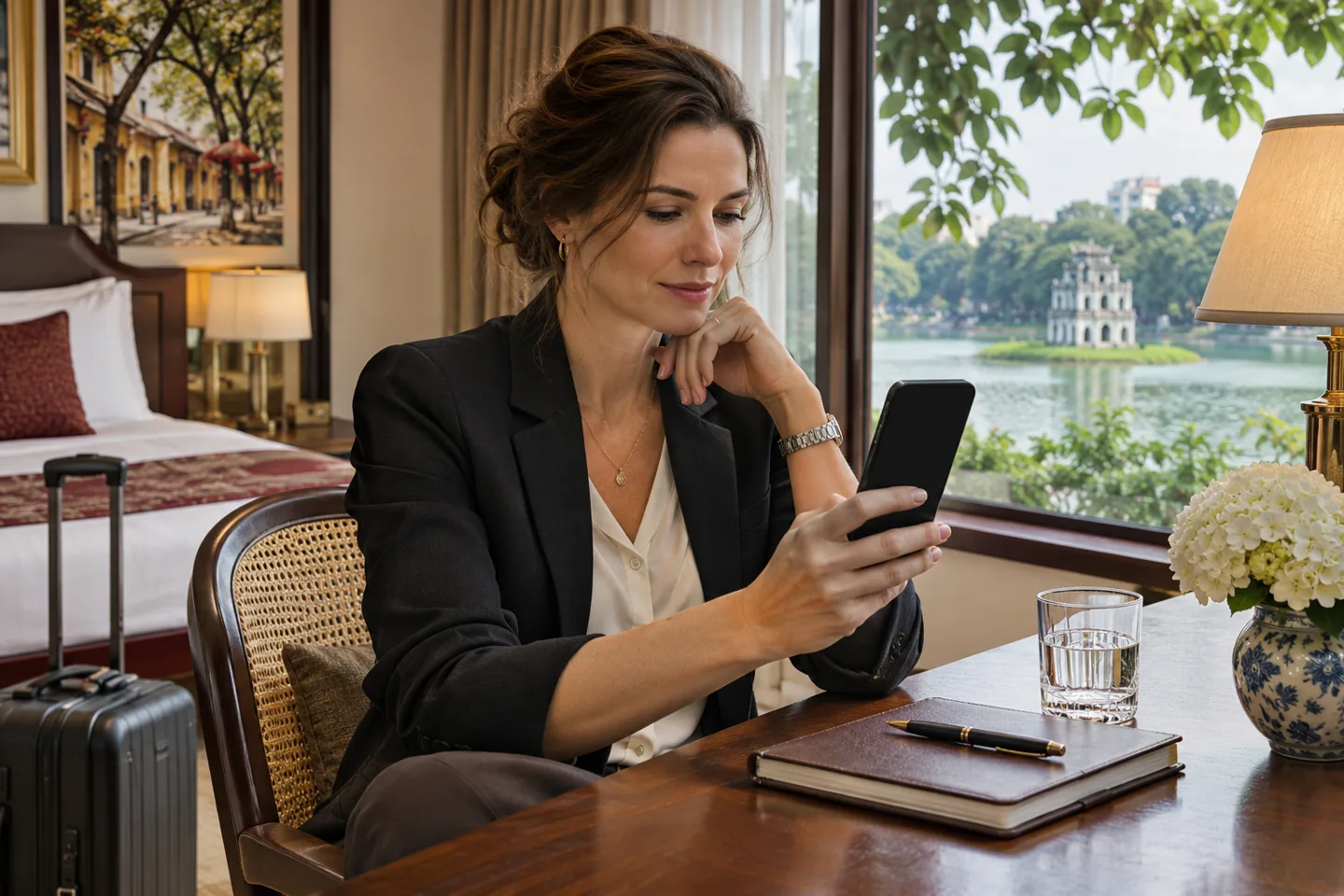
Minute 3–4: make a boundary for the evening. Decide whether you are done for today, available only for a true emergency or checking messages at a set time. If you are on call, set a boundary you can keep, such as leaving the phone volume on while moving the laptop out of reach. A realistic boundary is kinder than an unrealistic rule that makes you feel you failed.
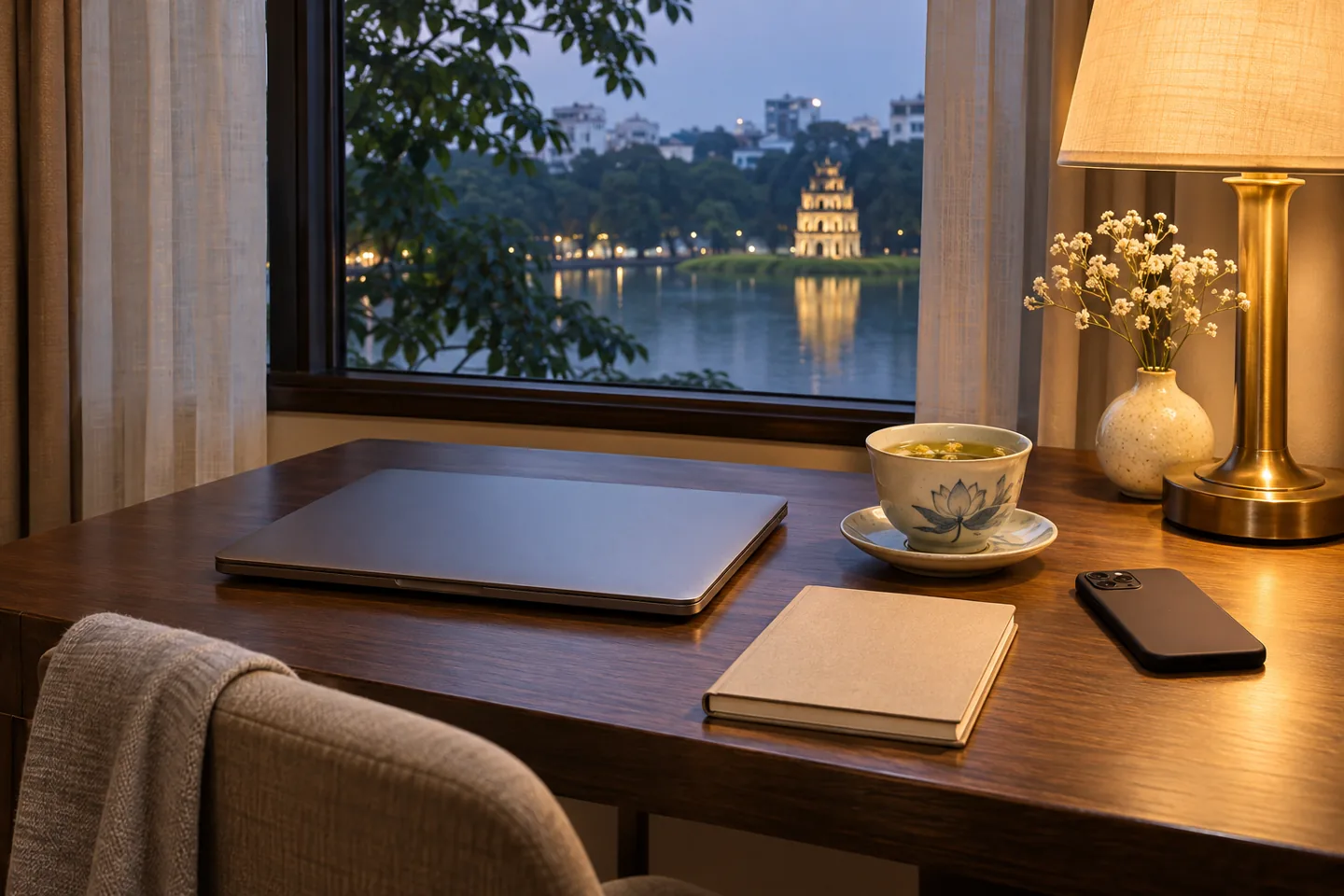
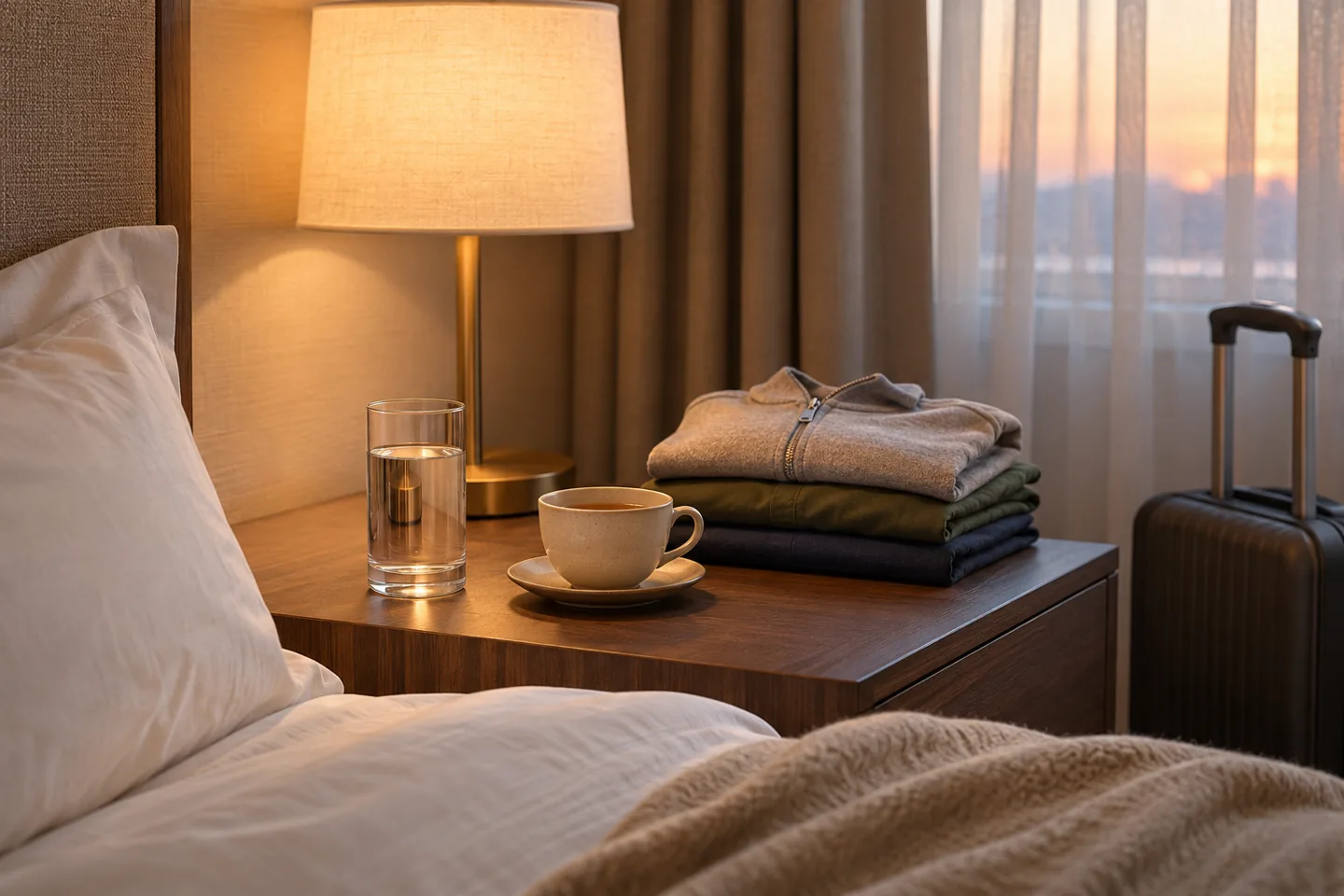
Minute 5–7: change the physical scene. Close the laptop, put the badge or work notebook away, change clothes and make a little space on the bedside table. You do not need candles, special music or a perfect hotel room. Small visible cues can help mark a transition because they change what is in front of you and what your hands are doing.
Minute 8–10: choose the next single step. That may be ordering dinner, taking a shower, calling someone, sitting quietly or going downstairs for a short walk. Choose one. When energy is limited, reducing choices often helps more than adding a long list of wellness tasks.
Choose an evening based on what you need, not what looks restorative
If you are hungry, prioritize food. A massage is unlikely to feel like the right decision if what you need is dinner and privacy. If you are overstimulated, reduce sound and notifications. If you feel isolated, send a message or call someone you trust. If you have been sitting for hours and feel stiff, stand, stretch gently or take a brief walk if the area and time feel safe. These are different needs, and one activity cannot meet all of them.
If you want grounding, the WHO’s Doing What Matters in Times of Stress guide includes practical exercises such as noticing what is around you, naming feelings and returning attention to the present. A simple version in your hotel room is to notice your feet against the floor, name five things you see and describe one sound without judging it. This is a short attention exercise, not a cure, and you can stop if it does not feel useful.
If breathing exercises feel comfortable, the NHS suggests a gentle breathing practice that can be done seated or lying down for several minutes. Do not force deep breaths or hold your breath to match an instruction. If attention to breathing increases discomfort, open your eyes, return to ordinary breathing and choose another grounding activity.
Where massage may fit—and where it may not
Massage Yoni Hanoi is one possible option for women who want an in-room appointment after work rather than another trip across Hanoi. The business describes its service for women and male therapists. Published sessions include bodywork and an optional-by-agreement intimate-area component; the consent information says you can exclude areas. Before booking, ask the team to confirm the scope you want. See the consent-first service guide and service menu.
A massage may feel soothing to some people because it gives them time away from work and a form of touch they have chosen. That is an individual experience, not a predictable medical result. The service is not psychotherapy, trauma treatment or a substitute for healthcare. NCCIH summarizes that massage research differs across conditions and that evidence is mixed or limited for many claims; it is not appropriate to promise that this specific service will heal stress, reset the nervous system, cure insomnia or remove travel fatigue. See NCCIH’s evidence and safety overview.
It may not be the right choice if you feel pressured, do not want a male therapist, have not checked the hotel’s visitor rules, cannot reserve the whole time, or simply want to be alone. You do not need to be “open-minded” or adventurous. “No, not tonight” is a valid decision. You can revisit the idea another day after reading the scope and policies without having to justify a change of mind.
If you are considering an outcall, protect the evening from becoming another project
The business advertises 24/7 appointments by arrangement. It recommends requesting an outcall 1–2 hours ahead and says the team usually responds within 5–10 minutes after checking availability. A request is not confirmation. You and the team must agree on time, location, package and total price. Review the booking process and do not plan the rest of your evening around an unconfirmed message.
Check your accommodation’s policy before requesting a room visit. Some hotels ask visitors to register, meet guests in the lobby or prohibit outside service providers. Follow the property’s rules, and do not ask the therapist to get around them. If the hotel does not permit a visit, the spa suite may be an alternative; if travelling there feels like too much effort, choose a no-booking evening instead.
Leave more time than the listed hands-on minutes. The current menu recommends roughly 15 extra minutes for a 60-minute session, about 20–25 for 90 minutes and 20–30 for 120 minutes; outcall arrival and hotel access add a separate buffer. If you have an early meeting or are still waiting on a dinner plan, a session can become a source of clock-watching. A shorter appointment or a different day may be more supportive of the evening you want.
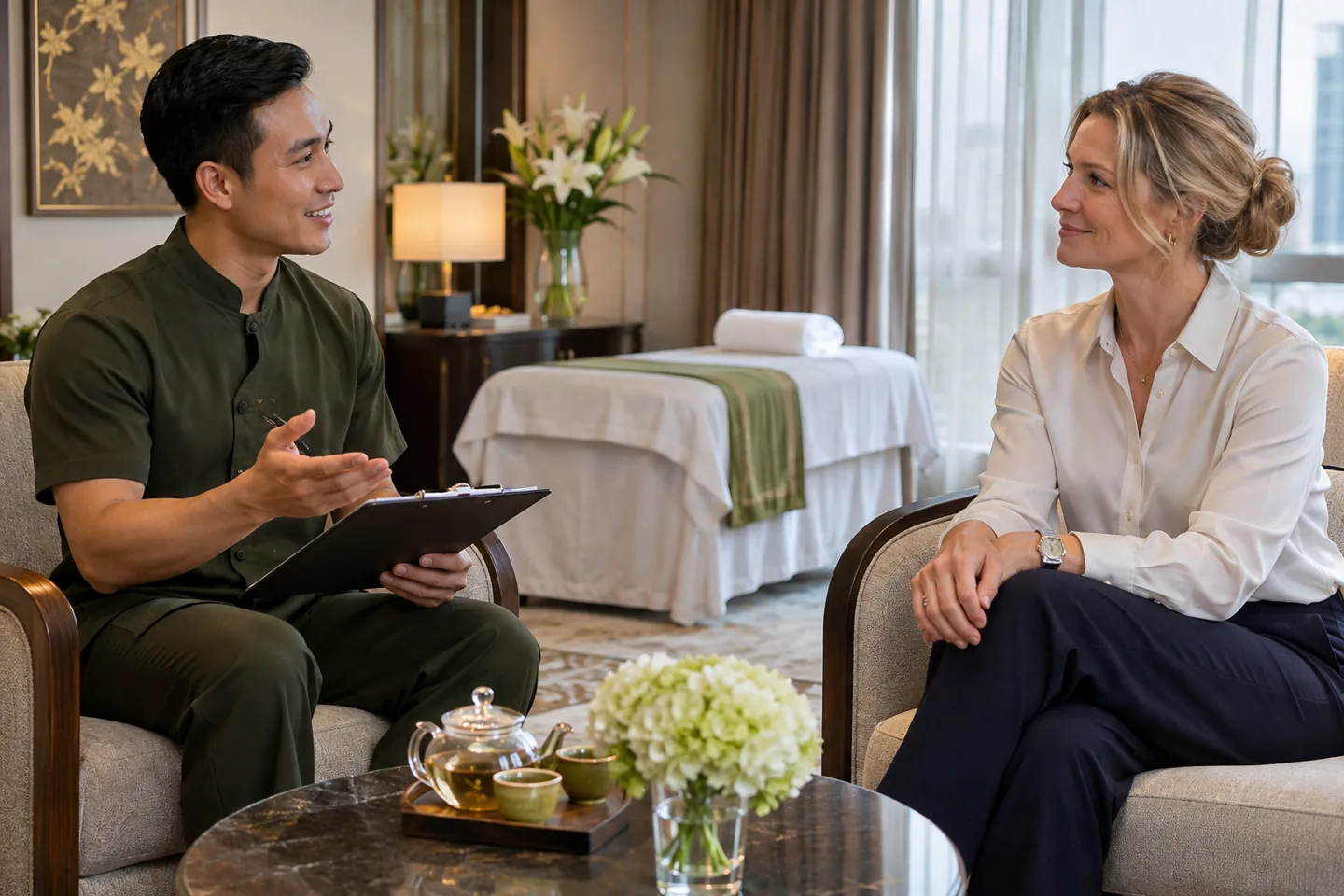
Before touch begins, tell the therapist what is in bounds, what is out of bounds and what pressure or conversation level you prefer. The business describes a red-yellow-green signal: green to continue within the agreed scope, yellow to adjust or pause, red to stop. You can speak up at any moment. Consent is not a performance requirement, and you do not need to disclose why you set a boundary. Full details are on the consent protocol.
A practical 30-, 60- or 90-minute reset plan
If you have 30 minutes: Put your work away for ten minutes, get water and food arranged, then choose one thing that feels restorative without demanding much. You might shower, call home, sit by the window or take a short walk. If there is a real work emergency, handle only that issue and return to your stopping point. There is no need to add a paid service to a short gap.
If you have 60 minutes: Keep the first 15 minutes for food or a change of clothes, then choose one 20-minute activity and reserve the remaining time for whatever you need afterward. You could read, stretch lightly, practice a grounding exercise or message someone. If you are considering a 60-minute massage, remember that the total visit is longer than the hands-on hour, and outcall requires advance coordination. Do not squeeze it into a one-hour gap.
If you have 90 minutes or more: You may have room for dinner and a deliberately unhurried activity. Do not assume more time means you must book the longest session. You could also spend the time doing nothing structured. If you request an appointment, confirm the whole time block, the property’s policy and the expected arrival before making other plans.
The emotional part: relief does not have to mean a breakthrough
The word “healing” can mean different things. In everyday conversation, a person may use it to describe feeling heard, safe, less rushed or more connected to herself. Those experiences matter, but a wellness provider should not imply that a massage treats trauma or replaces therapy. If a session brings up strong feelings, you can pause, stop, ask for space or choose not to continue. A practitioner should not press you to explain or interpret what you feel.
A gentle goal might be “I want to feel that this evening belongs to me for a while,” rather than “I need to become calm.” The first goal respects your agency; the second can feel like another demand. You can let a difficult feeling exist without turning it into a problem to solve before bedtime. If you want to talk through persistent distress, use a trusted support person or a qualified mental-health professional. A massage business is not equipped to provide crisis care.
Frequently asked questions
Do I need to book a massage to unwind after work in Hanoi?
No. Food, a shower, reducing notifications, a call with someone you trust, gentle movement or a quiet evening may suit you better. Massage is an optional paid service. Choose it only if you want the service itself, understand what it includes and can reserve enough time without rushing.
Can massage “heal” work stress or trauma?
No such result should be promised. The spa describes a wellness massage service, not mental-health treatment. Some clients may personally find an appointment relaxing, but that response varies. For ongoing anxiety, trauma symptoms, depression or stress that is affecting daily functioning, seek support from a qualified mental-health professional or healthcare provider.
What if I do not want intimate-area contact?
State your boundary before booking and repeat it during the pre-session check-in. The site says areas can be excluded. Ask the team to confirm the exact package scope in advance. You can change your mind, pause or stop at any time. You do not need to provide a reason.
How do I avoid making booking stressful?
Check your hotel policy first, pick a realistic time window and send only the information required to coordinate. Then wait for confirmation of time, location, package and price. The team recommends 1–2 hours’ lead time for outcall. If you cannot leave enough buffer, choose another evening.
What if I feel emotionally worse or overwhelmed?
Stop the activity that is increasing discomfort and move to something simple that feels safer, such as sitting near the door, calling someone you trust or stepping into a public area. If distress is intense, persistent or linked to trauma, contact qualified support. Do not rely on massage as a substitute for mental-health care.
Make tonight easier in the way that fits you
A restorative evening can be ordinary. It may be dinner and no email, a call with a friend, an early shower, or an appointment you chose because its boundaries and logistics are clear. Start with the need you can name, choose one small next step and give yourself permission to change plans. If you want to explore a session, read the service details and booking steps first; the team should confirm the complete arrangement before you rely on it.
General stress-management information is not diagnosis or treatment. Massage outcomes vary by individual. Business and price details checked against the live English pages on 9 November 2026.

Over 6 years researching somatic psychology, pelvic wellness, and consent-driven protocols for women in Hanoi.