Quick answer: Keep your first evening flexible. Check in, confirm tomorrow’s first commitment, eat and drink according to your needs, and unpack only what you need for the morning. A massage appointment can be an optional way to spend time in your room if you want it and the hotel permits it, but it cannot be promised to cure jet lag or guarantee sleep. Hanoi outcall appointments are arranged 24/7 subject to confirmation; the business recommends requesting 1–2 hours ahead.
Landing in a new city can be exciting and tiring at the same time. After a long flight, you may want to shower, eat, answer messages from home and get tomorrow’s clothes ready. You may also feel pressure to “make the most” of the first night, even when your body would prefer fewer decisions. A work trip adds another concern: the morning schedule may be fixed even if the arrival time is not.
This guide is for women arriving in Hanoi for business who want a grounded first-evening plan. It does not prescribe a single routine. Instead, it helps you prioritize what is necessary, decide whether you want an activity and keep any optional appointment easy to change. Massage is one possible wellness service, not a treatment for jet lag, travel fatigue or emotional distress.
Before you land: reduce avoidable decisions
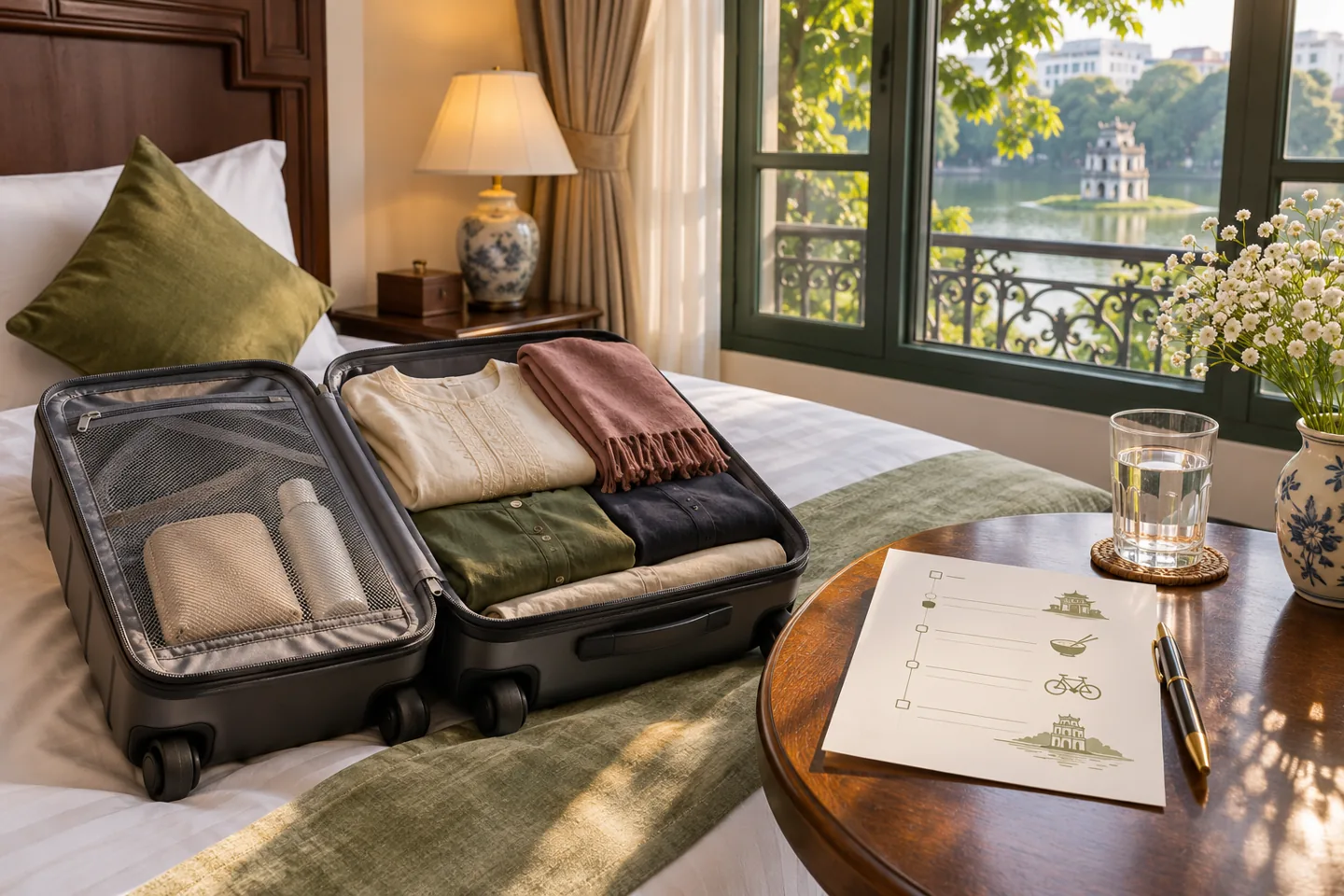
If you can, keep the first-night plan short before departure. Save the hotel address in your phone, note the first meeting’s time and location, and make sure you know how to contact the hotel. Put a charger, medication you already use as directed, toiletries and tomorrow’s work essentials somewhere easy to reach. This is practical preparation, not a wellness challenge. The fewer things you have to search for when tired, the less friction you add to check-in.
Do not pre-book a tightly timed service directly after a flight unless your arrival is predictable and the accommodation has confirmed the arrangement. Flights, immigration, baggage and transport can all take longer than expected. A flexible plan lets you make the decision based on how you feel after arriving rather than trying to perform the version of yourself who wrote the itinerary days earlier.
If you want to explore a hotel appointment, first check the hotel’s visitor policy and find out whether an outside service provider can visit a guest room. Some hotels require registration or restrict access. You can make that inquiry before travel without committing to a booking.
First hour at the hotel: settle the essentials
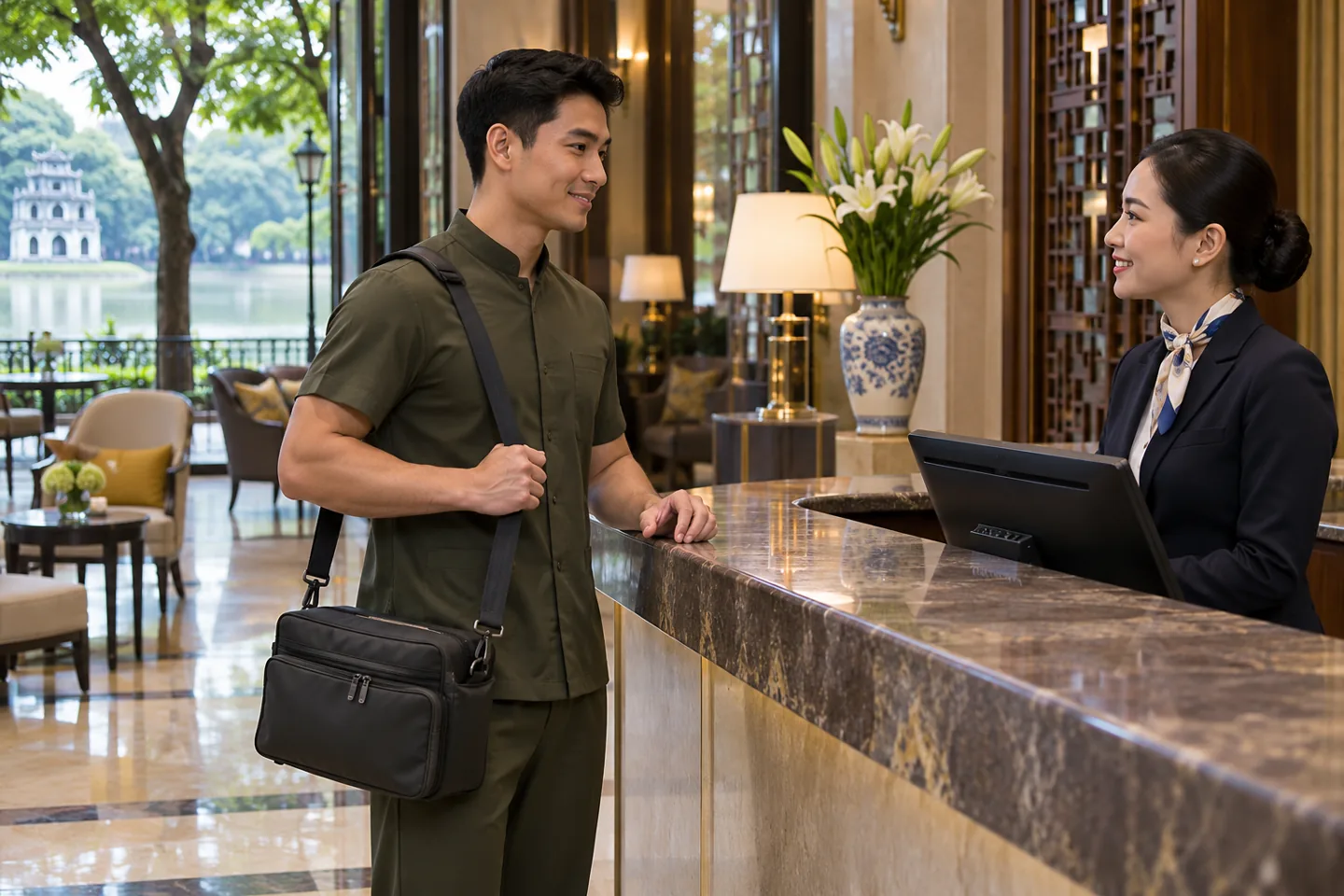
Once you arrive, confirm that you have the right room and that you can contact reception. Put your phone and charger where you can reach them, get drinking water and unpack only the items needed for the morning. If you have work clothes, a badge or a document for a client meeting, place them together. You can leave the rest of the suitcase closed until you have more energy.
Check tomorrow’s first commitment: start time, address, transport plan and any online meeting link. If something is unclear, resolve that practical uncertainty while you still have the information in front of you. Then write down what can wait. The NHS sleep guidance notes that writing down next-day tasks or worries can help some people clear their mind before bed; it is an option, not a guaranteed sleep method.
Eat according to your appetite and what is available. If you have not had much to drink, take a moment to rehydrate. Avoid deciding that you must go out just because you are in Hanoi. If you do want to explore, choose a simple, nearby plan and consider local conditions, time and your own comfort. The first evening can be restorative without being memorable to anyone else.
A low-demand arrival routine you can adapt
A practical order is: check in → water and food → wash or shower → set up the morning → choose one activity → stop planning. Each step is optional except the tasks required for your workday. You may reverse the order, skip a step or go straight to bed. The purpose is to remove decision overload, not to turn a personal evening into a protocol you have to complete correctly.
If your mind is still racing, try a short grounding practice. The WHO’s Doing What Matters in Times of Stress guide includes exercises that bring attention to physical surroundings, thoughts and personal values. In a hotel room, you could notice the support of the chair or floor, name a few objects and sounds, then choose the next small action. You do not need to force a particular emotion to appear.
If you enjoy a breathing exercise, the NHS stress breathing guide offers a gentle practice for a few minutes. Keep your breathing comfortable; do not strain or hold it. If focusing on breath is uncomfortable, stop and orient to the room or call someone you trust instead.
Should you book a massage on arrival night?
Ask what you want from the evening, rather than assuming that massage is the answer to being tired. Perhaps you want to avoid another journey and have some quiet, chosen bodywork in your room. Perhaps you want privacy, food or a chance to sleep without meeting another person. Both are reasonable. The service should be selected because it fits your preference and schedule, not because marketing says it will “reset” or “heal” you.
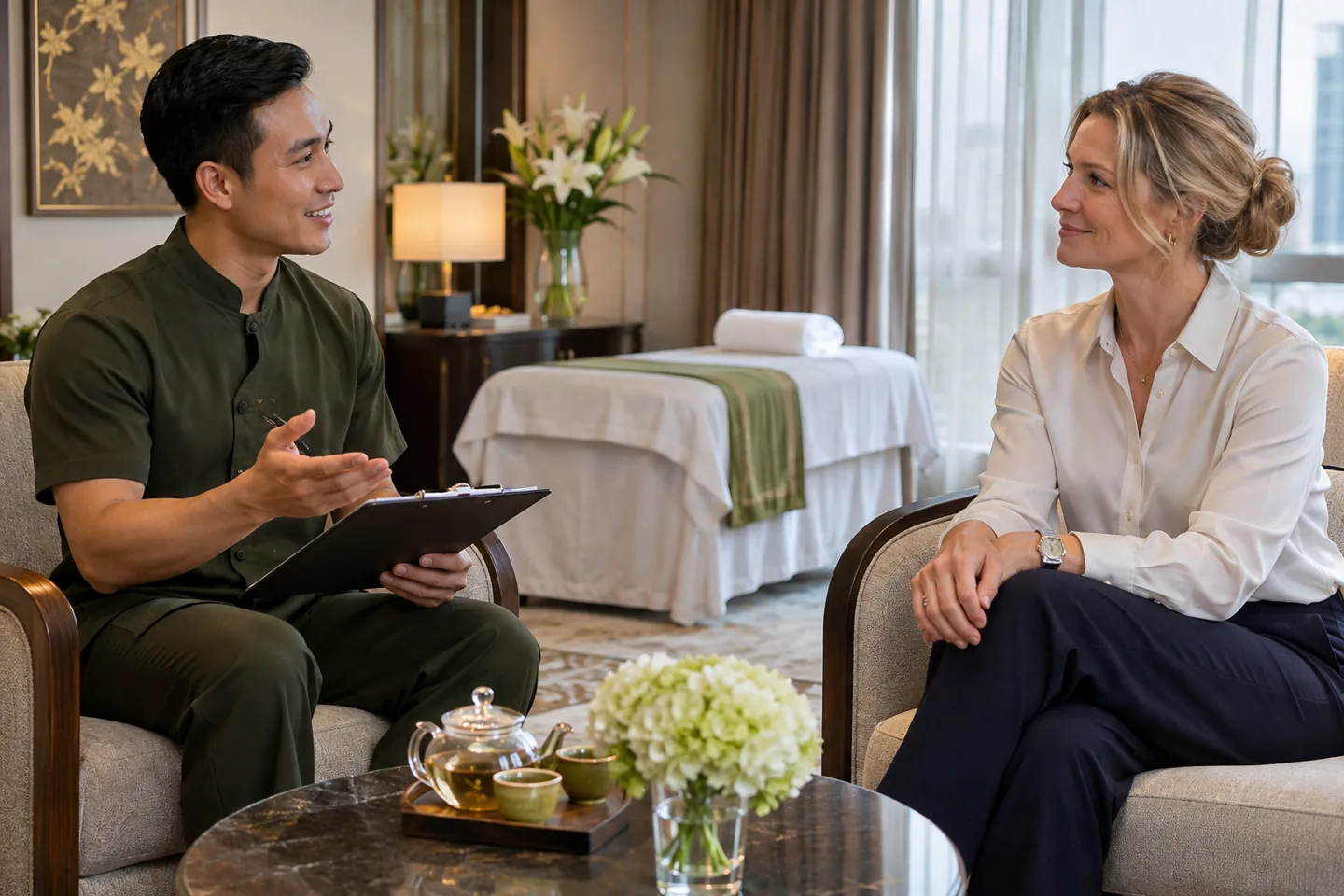
Massage Yoni Hanoi describes its service for women and male therapists. Its packages may include bodywork and a Yoni component within the agreed scope; the site states that clients can define boundaries and exclude areas. It is a wellness service, not psychological therapy, pelvic-floor physiotherapy or medical care. If you want a general body-and-back session only, ask the coordinator to confirm that exact scope for the package before booking. The consent-first guide explains what questions to ask.
Massage research is not proof that any one branded service treats the effects of flying. NCCIH describes evidence as varying across health conditions and notes safety considerations; do not rely on a massage provider to diagnose symptoms or promise a clinical result. Read NCCIH’s massage therapy overview. If you have a medical concern or feel unwell, contact a healthcare professional rather than booking a session to address it.
If you choose an outcall: sequence the request sensibly
Check your hotel’s rules first. Then decide whether you can reserve enough time after check-in to receive the service without rushing. The business owner has confirmed 24/7 operation, while the booking page advertises 24/7 outcall by arrangement. The current recommendation is to request 1–2 hours ahead. The team says it typically responds within 5–10 minutes after checking availability, but neither statement guarantees that a therapist can attend your specific address at a particular time.
The online request is not a confirmed appointment. The team must agree with you on the date and time, location, package and total price. If you arrive later than expected, update the coordinator before a therapist is dispatched. Ask for the estimated arrival window and how hotel reception access should be handled. Use the booking page and keep the reply where you can refer to it.
The site says a standard booking does not require a deposit and payment is after the session by cash or QR. Confirm the total price and payment method directly. Published prices are 1,000,000 VND for 60 minutes, 1,500,000 VND for 90 minutes and 2,000,000 VND for 120 minutes; the service page states the listed price is the same for spa and outcall. Check the current package page before deciding because prices can change.
Protect your time and boundaries after a flight
A listed session duration is hands-on time, not the entire visit. The service page asks you to reserve about 15 additional minutes for the 60-minute option, approximately 20–25 for 90 minutes and 20–30 for 120 minutes. An outcall also involves travel and hotel coordination. On arrival night, keep an extra buffer rather than putting an appointment immediately before a work call, meal or bedtime you want to protect.
Before touch begins, talk through the areas you want included or excluded, pressure, draping and whether you prefer quiet. Ask about fragrance if you are sensitive to oils. The spa’s published cue system is green to continue within the agreed scope, yellow to change or pause, and red to stop. You can use words at any time. You are allowed to change your mind after booking and after arrival; consent applies throughout, not only at the beginning.
If the therapist arrives and something does not match the confirmation, contact the coordinator before proceeding. If the setup, timing, price or boundaries feel wrong, you may decline the session. The business’s consent protocol and hygiene information can help you prepare questions. Do not rely on a blog article as proof of a specific practice; ask the team to confirm what will happen for your appointment.
If you are not ready to book
There is no lost opportunity in waiting until the next day. A flexible arrival plan can be: food, shower, essential preparation, a short call home, then no more decisions. If you still want an appointment after you have slept or seen your calendar, the team can check availability then. You do not have to prove that you are relaxed or “healed” before you start work tomorrow.
If what you are experiencing is not ordinary tiredness—such as severe distress, a physical symptom that worries you or persistent trouble functioning—massage is not the right substitute for care. Contact an appropriate healthcare professional or local support service. A wellness business can explain its own service, but it should not diagnose your condition.
Sample schedules for different arrivals
Early evening arrival, no fixed dinner: Check in and eat first. Once you know the room and feel settled, decide whether you want an appointment. If yes, check visitor rules, request a time and wait for confirmation. Leave the rest of the evening open. This approach avoids arranging a service while you are still in transit.
Late arrival with an early meeting: Prioritize the basics for tomorrow and sleep. Do not book a long session simply because the service is available around the clock. A 60-minute hands-on package still needs extra preparation time and an outcall arrival window. If the schedule would make you watch the clock, a quieter no-appointment evening may fit better.
Arrival with a delayed flight: Message the hotel or your work contact as needed, then update any service request before it is confirmed. If a booking was already confirmed, contact the coordinator promptly and ask whether to reschedule. The published policy asks for at least 60 minutes’ notice for a no-fee cancellation or change; check the current terms for your situation.
Frequently asked questions
Does massage cure jet lag?
No. A massage business should not promise to cure jet lag, reset your body clock or guarantee sleep. Some people may find a session relaxing, but responses vary. Plan around your arrival, meals, work obligations and personal preferences. If a health symptom concerns you, contact a clinician.
Can I book an outcall after midnight?
You can request one because the business advertises 24/7 arrangement. Availability at that hour depends on therapist scheduling, address and confirmation. The published recommendation is to request 1–2 hours in advance. Wait for an explicit reply confirming the full details before relying on a late-night appointment.
What if the hotel will not allow an outside visitor?
Respect its policy. Ask the team whether the Chua Boc suite can work for you, or leave the appointment for another day. Do not ask a therapist to evade the hotel’s registration or access rules.
How long does a session take in total?
The package minutes are hands-on. Add the extra time stated on the service page for intake, preparation and rest, then allow an additional outcall arrival and hotel-access buffer. Confirm the arrival estimate with the coordinator and keep the rest of your schedule open.
What details should I share in the booking form?
The form asks for contact details, package, preferred time, location and address for outcall. Add only the minimum information needed to coordinate. You can state service boundaries plainly, such as the areas you wish to exclude. Avoid sending sensitive health or personal history in general notes.
What if I feel too tired once I arrive?
Do not force an appointment. Tell the team you need to change or cancel and follow the current notice terms. A quiet evening, meal and sleep are valid choices. You can request service later if it still feels right.
Let your first night be flexible
A first evening can be successful because it made tomorrow easier, not because it contained a special activity. If an outcall would genuinely reduce friction and the hotel permits it, use the booking process to confirm the details and leave generous time. If a service feels like one decision too many, choose the simpler plan. Either way, you remain the person who decides what rest should look like.
Business facts checked against the live English booking, services and consent pages on 9 November 2026. The business owner confirmed 24/7 operation; individual availability is subject to direct confirmation.

Over 6 years researching somatic psychology, pelvic wellness, and consent-driven protocols for women in Hanoi.