
The simplest payment plan for a first visit to Hanoi is to carry a small amount of Vietnamese đồng (VND), keep an international card available for businesses that accept it, and treat QR payment as an extra option only if your own bank or payment app supports the code. Do not assume that every shop, café or driver accepts the same methods. Before ordering or booking, ask which methods are accepted and confirm the total in VND.
This guide is for international visitors arriving in Hanoi for tourism or work. It explains how to make a practical backup plan without carrying a large amount of cash or relying on a payment app that may not work abroad. Payment acceptance can vary by business and change over time, so use the advice as a framework and confirm details at the point of payment.
The quick answer: bring three options, rely on two
Think in layers: a little local cash for smaller purchases, a card for places that accept international cards, and a second way to pay if the first one fails. A QR code may be convenient when it works, but you should not build your whole day around it unless you have already confirmed that your home-country app can pay Vietnamese merchants.
The Vietnam National Authority of Tourism says cash remains useful for small purchases and street vendors, while many larger establishments accept major cards. That makes a mixed approach more practical than choosing “cash only” or “card only.” The same agency advises visitors to check live exchange rates rather than relying on a fixed conversion in a travel article.
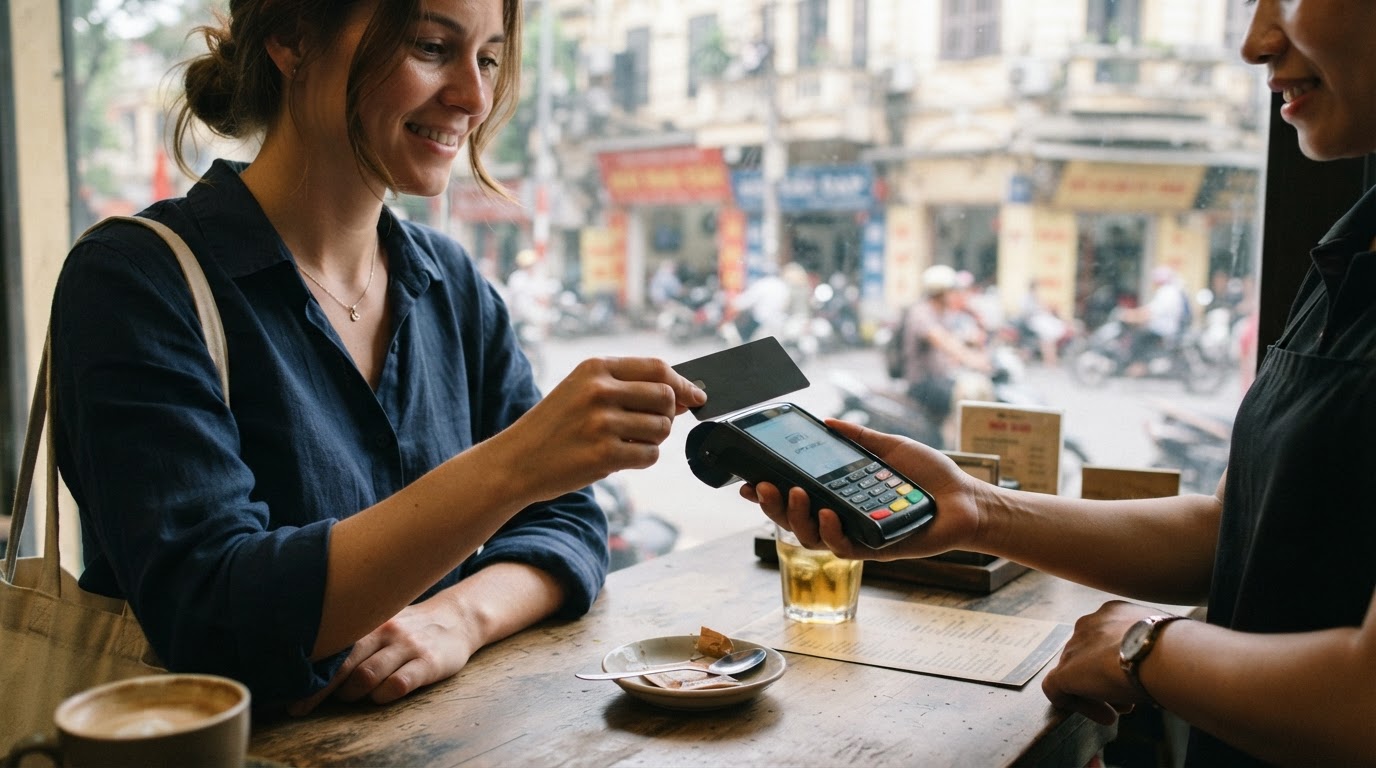
What to expect from each payment method
Cash in Vietnamese đồng
Cash is useful when the amount is small, the business is informal, or a card terminal is not available. You may find it helpful for a drink, a small purchase or a place that clearly asks for cash. Keep the amount you carry modest and store a backup separately from your wallet. You do not need to exchange your entire travel budget before you know what you will spend.
Vietnamese notes have several zeros, so pause and read the printed denomination before handing one over. Vietnam Tourism specifically warns that the 20,000 VND and 500,000 VND notes are similar shades of blue. Check the number on the note rather than relying on colour alone, especially when you are tired or paying quickly.
International debit or credit cards
Cards can be convenient for hotels, established restaurants, shops and other businesses that accept them. Acceptance is not universal, so ask before you order or before a service begins. Check with your card issuer before travelling about foreign transaction fees, cash withdrawal fees, daily limits and how to report a lost card. Keep the bank’s contact details somewhere separate from the card itself.
When a payment terminal asks you to confirm the amount or currency, take a moment to read the screen. Confirm the amount shown in VND and follow your card provider’s guidance on currency conversion. Keep the transaction notification or receipt until you have checked that the charge looks right. If anything is unclear, ask the staff member to explain before tapping or entering your PIN.
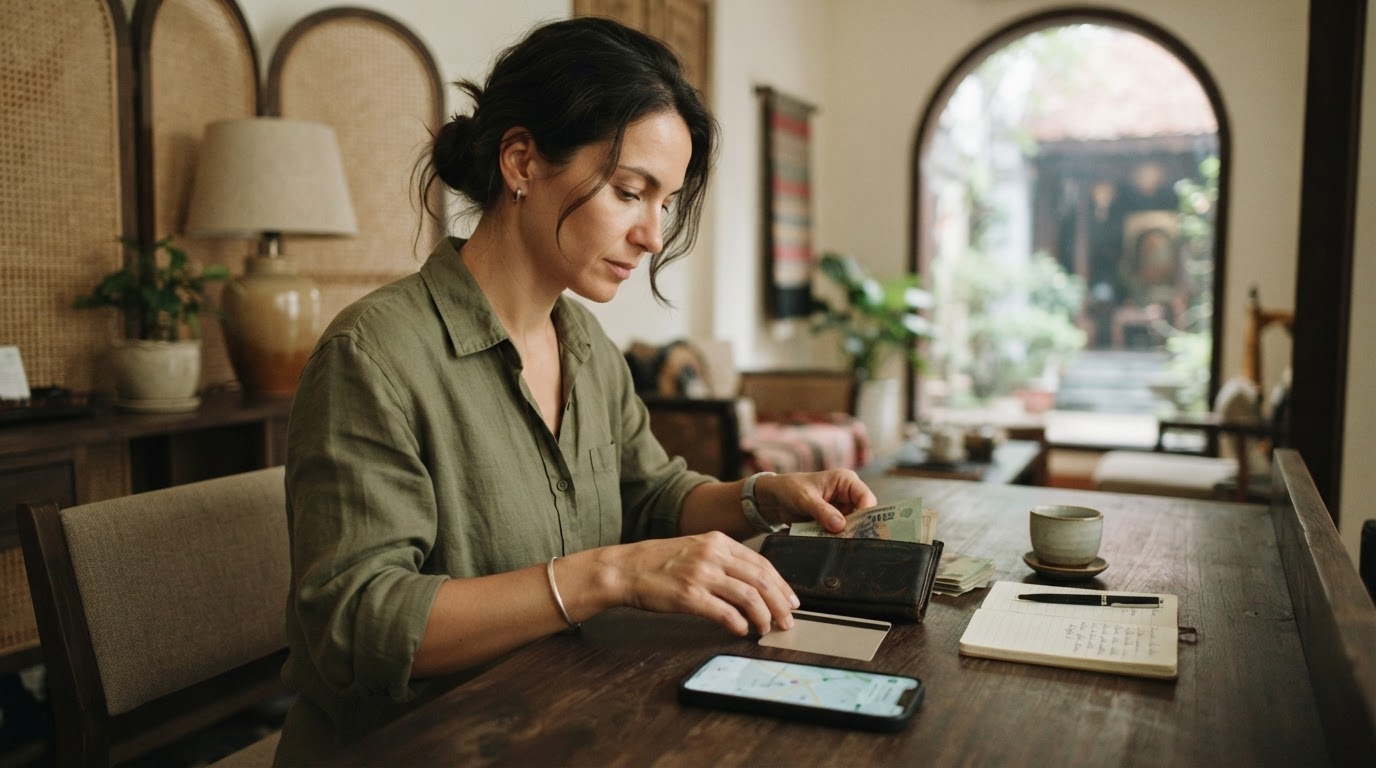
QR codes and mobile payment apps
QR payment options are expanding, including cross-border connections, but that does not mean every visitor can scan every code. Whether it works depends on the payment network, your home-country bank or wallet, the merchant’s QR setup and any limits set by your provider. Some systems are designed for domestic accounts; others connect only specific markets or apps.
The practical rule is simple: check your app before the trip, and ask the merchant whether your particular app is accepted before you order. Do not scan an unfamiliar code if you cannot verify the recipient and amount shown in your payment app. If the QR option does not work, switch calmly to cash or card rather than assuming the merchant has done something wrong.
Vietnam’s National Payment Corporation, NAPAS, says it is expanding cross-border QR connections. These developments are useful to know about, but the available network is not a guarantee that your particular account will work at every Hanoi business. For a short stay, QR is best treated as a bonus, not your only payment method.
A simple plan for your first day
- Before you travel: tell your card issuer you may use the card abroad if its rules require it. Check fees, card limits, overseas support and how to freeze the card from your phone.
- When you arrive: keep one payment card accessible and obtain a modest amount of VND from a method you trust. Vietnam Tourism notes that international-card ATMs are available at major airports and in cities; check the ATM’s displayed fees and your bank’s terms before confirming.
- During the day: ask about accepted payment methods before ordering when it matters. Keep smaller notes for low-value purchases and maintain a separate backup card or emergency option.
- At the end of the day: review card alerts and receipts, and store your cash and cards securely. If you notice a charge you do not recognize, contact your card issuer promptly through its official app or number.
Exchanging money and withdrawing cash
If you need cash, Vietnam Tourism lists airport exchange counters, banks and some hotels or tourist areas as places visitors may be able to exchange currency. Compare the displayed rate and any commission before you agree. If using an ATM, read the on-screen fee and withdrawal amount, and remember that your own bank may add a separate charge. ATM limits vary, so a declined withdrawal does not necessarily mean the card is unusable.
Avoid exchanging more than you expect to use simply because you want to finish the task at once. Keep the exchange receipt where useful, and use a secure, well-lit place to count or organize cash. If you are unsure which option is best, ask your hotel to direct you to a bank or established exchange counter rather than accepting an unsolicited offer from a stranger.
Confirm the price before a service starts
For any appointment, tour or transfer, check the total price, what is included, the accepted payment methods and whether a deposit is required before you commit. Ask whether a quoted price is in VND or another currency, and keep the written confirmation. Clear terms protect both the customer and the business from mismatched expectations.
For Massage Yoni Hanoi, the current English booking page says a booking request is not a confirmed appointment: the team checks availability and confirms after agreeing on the package, time, location and price. It also says standard bookings do not require a deposit and payment is made after the session by cash or QR. These are service-specific terms, so check the live English booking page before requesting an appointment.
If you want to compare package duration and listed prices before deciding, review the current services and rates. Visitors planning to come to the studio can also read the studio arrival and booking checklist. The page should answer the practical questions first; if a detail is missing, ask the coordinator to confirm it in writing before you travel.
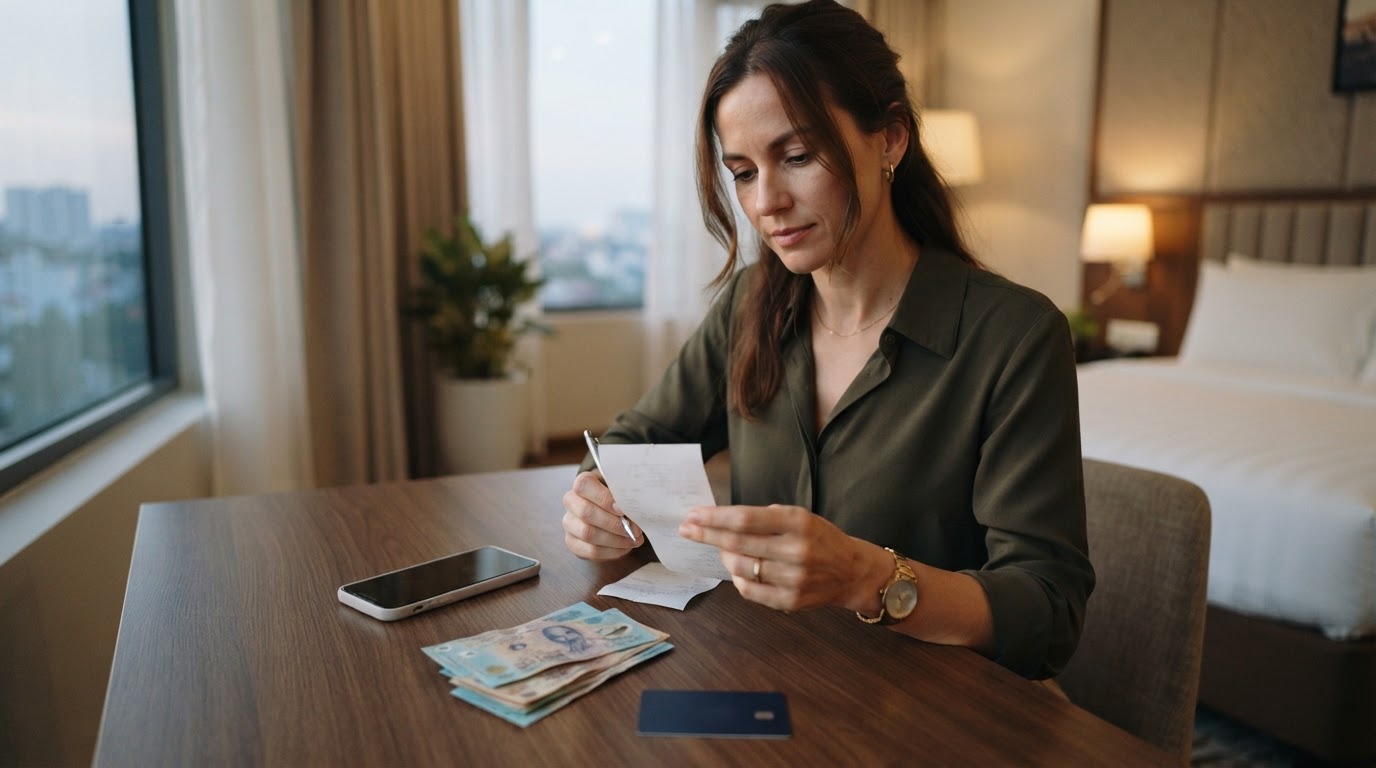
Common payment mistakes to avoid
- Assuming a QR code is universal. Ask whether your app is accepted and keep another method available.
- Carrying all your cash together. Keep only what you need for the outing accessible and store the rest securely.
- Rushing through a large number. Pause to check the VND denomination or payment amount on the screen.
- Starting a service before confirming terms. Agree on the full price, inclusions and payment method first.
- Using a payment link or QR code you cannot verify. Check the recipient and amount inside your own payment app before approving.
Frequently asked questions
Should I bring cash or a card to Hanoi?
Bring both if you can. Cash is useful for smaller purchases and places that do not accept cards; an international card can be convenient at many larger establishments. Keep a backup method and ask about acceptance before you depend on either one.
Can I use my home-country QR payment app in Hanoi?
Possibly, if your provider has a compatible cross-border connection and the merchant accepts that network. Check with your bank or app before travelling. A QR symbol alone does not confirm that your account can pay that merchant.
How much cash should I exchange before arriving?
There is no single amount that suits every visitor. Consider your arrival time, whether transport or your hotel is prepaid, and whether you can access an ATM or exchange counter. A modest amount for immediate needs plus a card backup is a practical starting point.
Do I need to tip in Hanoi?
Vietnam Tourism says there is no set tipping rule and tipping is not generally expected, although it may be appreciated in some situations. If a business has a specific service charge or tip policy, ask before paying.
What should I do if a payment is declined?
Ask whether another method is accepted, check that your card is unlocked for overseas use and review the bank’s app for an alert. If the issue is a QR app, do not keep retrying if the recipient or amount is unclear; use a verified alternative.
A calm payment plan makes a new city easier
You do not need to master every payment system before arriving in Hanoi. Carry a modest amount of VND, keep an international card and a backup, and confirm acceptance and total price before you commit. Use QR if your own app and the merchant both support it, but do not depend on it as your only option.
For broader travel planning, see our guides to getting around Hanoi between business appointments and choosing an area to stay. For official information, read Vietnam Tourism’s currency and payments guide and NAPAS’s update on cross-border QR connectivity.
Information about the business’s payment terms was checked against its English booking page on 14 November 2026. Payment methods, fees and exchange rates can change; confirm them with the relevant provider before paying.

Over 6 years researching somatic psychology, pelvic wellness, and consent-driven protocols for women in Hanoi.
Related articles

How to Book a Massage in Hanoi in English: A WhatsApp Message Template for Travelers
Visiting the Chua Boc Massage Studio in Hanoi: Address, Arrival and Booking Checklist

Can I Request an English-Speaking Male Therapist in Hanoi?