
The easiest way to stay connected in Hanoi is to choose a data plan before you land and keep hotel Wi-Fi or a second line as backup. For a short visit, you can use home-carrier roaming, a travel eSIM or a local SIM. The right choice depends on your phone, how much data you need and whether you need a Vietnamese number for normal calls or SMS.
A working connection helps with more than sightseeing: you may need to confirm a hotel address, check a live route, contact a driver, join a work call or message a business. This guide helps first-time visitors prepare without assuming every phone supports eSIM, every plan includes calls, or every counter sells the same product.
Start with the option that fits your phone
Before buying anything, check whether your phone supports eSIM and is unlocked for use with another carrier. Apple’s guide says an eSIM needs a supported device and carrier, and an iPhone must be unlocked to use a plan from a different carrier. Android menus and carrier requirements differ, so check your phone maker and provider rather than relying on a model list in a travel blog.
| Option | Useful when | Check first |
|---|---|---|
| Home-carrier roaming | You want to keep your number and avoid setup on arrival | Data price, calls and SMS charges, pass expiry |
| Travel eSIM | Your unlocked phone supports eSIM and you mainly need data | Data allowance, validity, hotspot, voice/SMS, activation |
| Local physical SIM | You want a local line or your phone has no eSIM support | Passport registration, plan length, voice and top-up |
| Hotel Wi-Fi | You need a backup or only occasional access | Correct network name, password and coverage |
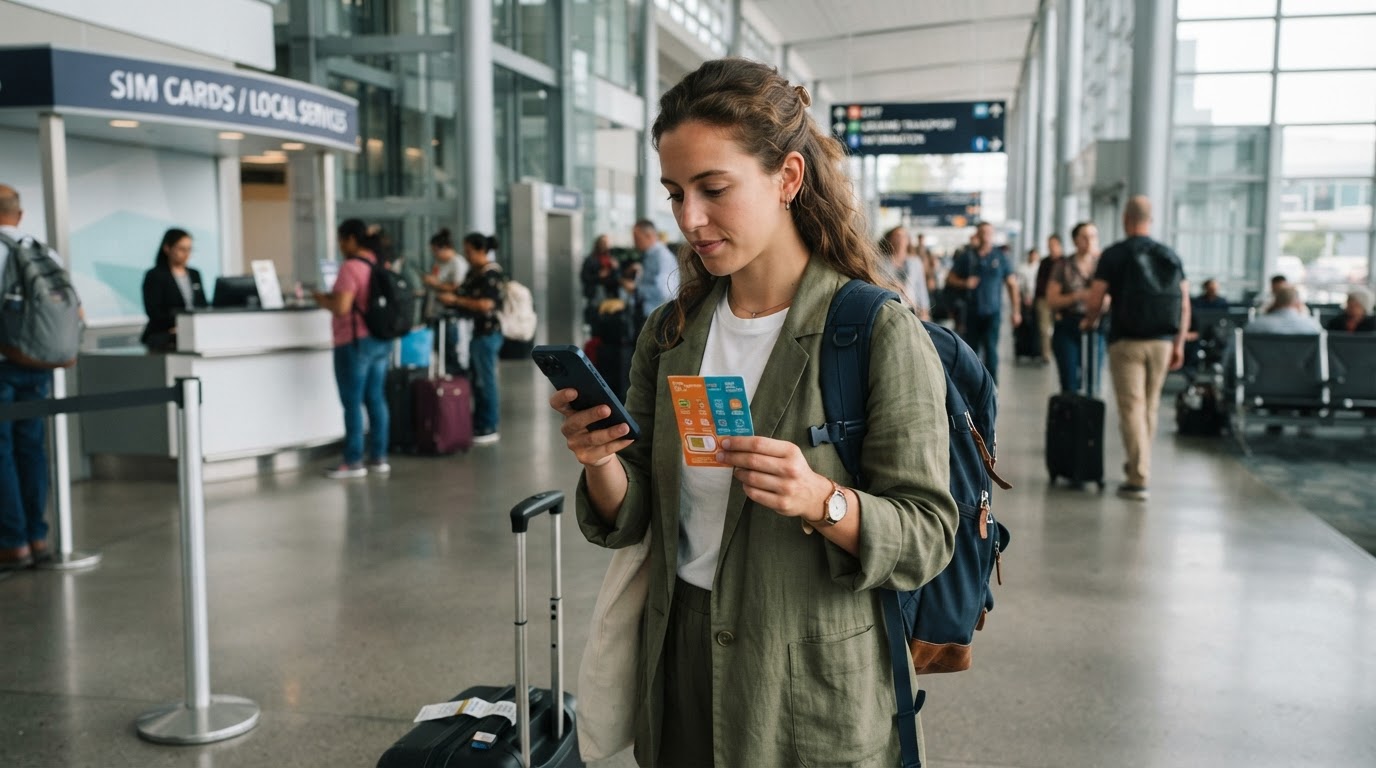
Roaming: the simplest setup if the price is clear
Roaming can suit a short trip if your carrier offers a clear Vietnam plan and you need your regular number for calls, messages or work verification. Check the carrier’s official app or website before departure. Confirm the price, whether incoming calls or SMS cost extra, when the pass starts and what happens when included data runs out.
If you only need data after landing, compare a travel pass with pay-as-you-go roaming before switching data roaming on. Check for limits and automatic renewal. Keep the carrier’s support details available offline in case you need to ask about a charge.
Travel eSIM: convenient, but read the plan details
An eSIM is a digital SIM profile. Some travel plans provide data only; others may include a phone number or voice service. Read the plan description carefully: a data-only eSIM may not receive ordinary calls or SMS. It can still provide internet access for maps and app-based messages, but those are different from a local phone number.
Install only through the provider’s official app, website or instructions. Apple notes that eSIM setup may require an internet connection and that carriers use different activation methods, including QR codes or apps. Save the instructions before travelling. If the connection does not appear immediately, ask the provider for help before deleting the eSIM profile.

Before paying, check the data allowance, validity period, hotspot rules, whether voice or SMS is included, when the plan starts and how to contact support. If you plan to install before flying, confirm whether installation starts validity or whether it starts on arrival; providers differ.
Local SIM: useful if you need a Vietnamese number
A local SIM may suit visitors who need a Vietnamese number or want in-person setup. The Vietnam National Authority of Tourism says visitors should show a passport to register a local SIM and that prepaid SIMs are available at major airports and shops. Requirements and packages can change, so confirm the current process with the carrier or an authorised seller.
Choose a clearly identified carrier counter or official store. Ask what the plan includes, whether it has a local number, how long it stays active and how to check remaining data. Keep your original SIM somewhere safe if you remove it. Do not share an activation code or hand your phone or passport to an unverified seller.
Data-only or a local number: what do you actually need?
For maps, email, web browsing and messaging apps, data may be enough. A local number can matter if a hotel, driver or business needs to call you on the regular phone network, or if a service requires SMS verification. Check your itinerary before choosing a plan instead of paying extra for features you will not use.
If your phone supports two lines, you may be able to keep your home number available while using local data. Setup depends on your device and carrier. Ask your home carrier about charges before leaving the line active. If you rely on one-time verification texts for banking or work, test how you will receive them before switching SIMs.
A practical arrival sequence
- Before departure: check phone compatibility and unlock status; save your hotel and meeting addresses in a note; check roaming charges; and keep eSIM instructions or plan confirmation available.
- After landing: use official airport Wi-Fi if needed, activate the plan with the provider’s instructions, and confirm mobile data works before leaving the arrivals area.
- Before arranging transport: enter the destination from your saved address and check the pickup point. If you cannot get online, ask airport staff or your hotel for help instead of accepting an unsolicited ride offer.
- At the hotel: confirm the Wi-Fi name with reception, save the hotel’s phone number and keep a written copy of the address in case your battery or data runs out.

Use data to make local plans more predictable
A live connection is useful when a route changes or a meeting runs late. Check a map before leaving rather than relying on a fixed travel-time estimate, and send the address in writing when coordinating a pickup. Our guide to getting around Hanoi between business appointments explains why visitors should leave room for traffic and finding a building entrance.
If you are choosing an area to stay, see our guide to where to stay in Hanoi for a business trip. If you want to ask about an appointment later, the English booking page lists contact options and explains that a request is not confirmed until the team replies. You can message over a data connection; there is no need to put personal details in a public comment.
If your phone will not connect
- Check which line is selected for mobile data and whether the plan is active.
- For roaming, confirm the pass is active and your carrier permits data roaming in Vietnam.
- For a SIM or eSIM, check the provider’s setup steps and whether the plan has expired or run out of data.
- Restart the phone if your provider recommends it, then test again where the signal is clear.
- Do not delete an eSIM or reset network settings as your first step; ask the carrier or provider what to do.
- Use verified hotel Wi-Fi temporarily and keep support instructions available offline.
Frequently asked questions
Can I use a travel eSIM without changing my WhatsApp number?
A data-only eSIM can provide internet without replacing the number linked to a messaging account, but app behaviour and verification depend on your account and device. Keep access to your existing number if the app asks you to verify it, and check the plan before relying on it for calls or SMS.
Do I need my passport to get a local SIM?
Vietnam Tourism’s visitor guide says a passport is needed to register a local SIM. Bring it if you plan to buy one and confirm the current requirements with the carrier or authorised seller.
Is hotel Wi-Fi enough for a visit to Hanoi?
It may be enough if you mostly stay at the hotel. Mobile data or roaming gives you more flexibility for maps, ride bookings and messages while out. Many visitors use one as the primary option and Wi-Fi as backup.
Should I buy an eSIM before travelling or at the airport?
Either may work. Buying ahead gives you time to compare plans and check compatibility; buying in person may make it easier to ask for setup help. Compare validity, support and included features, not only the advertised data amount.
Will a data-only SIM let people call me?
Not necessarily. Data-only usually means internet access without ordinary voice calls or SMS from a local number. Ask the provider before buying if local calls or text verification matter to you.
Choose a setup you can verify
You do not need to master every mobile network before arriving in Hanoi. Check compatibility, decide whether you need data or a local number, understand when the plan starts and keep a backup. Set up the basics before you are rushing to a meeting or trying to find your hotel from an unfamiliar arrivals hall.
For current local SIM guidance, see the official Vietnam Tourism guide to SIM cards and helpful numbers. iPhone users can review Apple’s eSIM travel instructions; Android users should check their device maker and carrier. Provider requirements and prices can change, so confirm them directly before purchase.
Information checked on 14 November 2026. This is a preparation guide, not an endorsement of a specific SIM provider or plan.

Over 6 years researching somatic psychology, pelvic wellness, and consent-driven protocols for women in Hanoi.
Related articles

Yoni Massage Near Hanoi Old Quarter: Is the Studio Actually Nearby?

A Half-Day in Hanoi Between Meetings: A Low-Rush Plan for Women Travelers

Cash, Cards or QR in Hanoi? A Practical Payment Guide for First-Time Visitors